
The Artist's Way: A Spiritual Path to Higher Creativity
Paperback
• 272 Pages
• GBP 12.54
• English
• 9781788164290
No ratings yet
| Publisher | Souvenir Press |
|---|---|
| ISBN13 | 9781788164290 |
| ASIN/SKU | 1788164296 |
| Book Format | Paperback |
| Language | English |
| Pages | 272 |
| List Price | GBP 12.54 |
| Publishing Date | 05/11/2020 |
| Book Code | BD00069343 |
Buy this Book
Amazon Stores
Ebook Stores
Other Stores
Discover The Artist's Way: A Spiritual Path to Higher Creativity by Julia Cameron. This book is published by Souvenir Press in Paperback format, ISBN 9781788164290, ASIN 1788164296, under Arts and Photography, Music, Inspirational Spirituality.
Book Description
'A really good starting point to discover what lights you up' - Emma Gannon
'Unlock your inner creativity and ease your anxiety' Daily Telegraph
THE MULTI-MILLION-COPY WORLDWIDE BESTSELLER
Since its first publication, The Artist's Way has inspired the genius of Elizabeth Gilbert, Tim Ferriss, Reese Witherspoon, Kerry Washington and millions of readers to embark on a creative journey and find a deeper connection to process and purpose. Julia Cameron guides readers in uncovering problems and pressure points that may be restricting their creative flow and offers techniques to open up opportunities for growth and self-discovery.
A revolutionary programme for personal renewal, The Artist's Way will help get you back on track, rediscover your passions, and take the steps you need to change your life.
'Each time I've learned something important and surprising about myself and my work ... Without The Artist's Way, there would have been no Eat, Pray, Love' - Elizabeth Gilbert
'Unlock your inner creativity and ease your anxiety' Daily Telegraph
THE MULTI-MILLION-COPY WORLDWIDE BESTSELLER
Since its first publication, The Artist's Way has inspired the genius of Elizabeth Gilbert, Tim Ferriss, Reese Witherspoon, Kerry Washington and millions of readers to embark on a creative journey and find a deeper connection to process and purpose. Julia Cameron guides readers in uncovering problems and pressure points that may be restricting their creative flow and offers techniques to open up opportunities for growth and self-discovery.
A revolutionary programme for personal renewal, The Artist's Way will help get you back on track, rediscover your passions, and take the steps you need to change your life.
'Each time I've learned something important and surprising about myself and my work ... Without The Artist's Way, there would have been no Eat, Pray, Love' - Elizabeth Gilbert
Author Biography
Hailed by the New York Times as 'The Queen of Change', Julia Cameron is credited with starting a movement in 1992 that has brought creativity into the mainstream conversation - in the arts, in business, and in everyday life. She is the bestselling author of more than forty books, fiction and nonfiction; a poet, songwriter, filmmaker and playwright. Commonly referred to as 'The Godmother' or 'High Priestess' of creativity, her tools are based in practice, not theory, and she considers herself 'the floor sample of her own toolkit.' The Artist's Way has been translated into forty languages and sold over five million copies to date.
www.juliacameronlive.com
www.juliacameronlive.com
Editorial Reviews
The queen of change ― New York Times
I absolutely love this book ... It's a really good starting point to discover what lights you up -- Emma Gannon
It's the book I recommend to everyone -- Mahalia
Morning pages has become a household name, a shorthand for unlocking your creative potential ― Vogue
It's a big dog book ... [morning pages] gets all the gunk out of my head so that I can just start afresh and focus on whatever is in front of me -- Michaela Coel
I talk about this book all the time - I use quotes from it when I interview people, I use techniques from it to improve how I work, I'm pretty obsessed with the book, I've read it twice, it's amazing -- Fearne Cotton
It's a great tool for any type of creative person. I've given away so many copies -- Tayari Jones
Julia Cameron is the queen of morning routines [and] has been unlocking our inner creative spirits for more than two decades. Everyone is doing The Artist's Way ... it'll make you more creative ― The Cut
Fascinating (and fun) ... Three times in the last decade I've committed to doing The Artist's Way's program, and each time I've learned something important and surprising about myself and my work ... Without The Artist's Way, there would have been no Eat, Pray, Love -- Elizabeth Gilbert
If you have always wanted to pursue a creative dream, have always wanted to play and create with words or paints, this book will gently get you started -- Anne Lamott
Unlock your inner creativity and ease your anxiety ― Daily Telegraph
I found my way to writing to an artist workbook called The Artist's Way by Julia Cameron ... Being introduced to that book, over 20 years ago, really changed my life. I still do [the morning pages] every day; it gets everything out - right at the top of the day. All the anxiety, all the fear, all the mess - it comes out and then it cracks open and leads you to wherever it is that you're supposed to be inside your creativity. I never wrote until I started The Artist's Way, so I would say: Start there -- Billy Porter
So inspiring -- Reese Witherspoon
I picked this book up for the first time when I was twenty-one years old. It completely changed my life. I did it again ten years ago and the impact was again life-altering. Something in my soul was stirring me to come back to it. So ... here we go ... I'm excited to meet myself on this path again -- Kerry Washington
I absolutely love this book ... It's a really good starting point to discover what lights you up -- Emma Gannon
It's the book I recommend to everyone -- Mahalia
Morning pages has become a household name, a shorthand for unlocking your creative potential ― Vogue
It's a big dog book ... [morning pages] gets all the gunk out of my head so that I can just start afresh and focus on whatever is in front of me -- Michaela Coel
I talk about this book all the time - I use quotes from it when I interview people, I use techniques from it to improve how I work, I'm pretty obsessed with the book, I've read it twice, it's amazing -- Fearne Cotton
It's a great tool for any type of creative person. I've given away so many copies -- Tayari Jones
Julia Cameron is the queen of morning routines [and] has been unlocking our inner creative spirits for more than two decades. Everyone is doing The Artist's Way ... it'll make you more creative ― The Cut
Fascinating (and fun) ... Three times in the last decade I've committed to doing The Artist's Way's program, and each time I've learned something important and surprising about myself and my work ... Without The Artist's Way, there would have been no Eat, Pray, Love -- Elizabeth Gilbert
If you have always wanted to pursue a creative dream, have always wanted to play and create with words or paints, this book will gently get you started -- Anne Lamott
Unlock your inner creativity and ease your anxiety ― Daily Telegraph
I found my way to writing to an artist workbook called The Artist's Way by Julia Cameron ... Being introduced to that book, over 20 years ago, really changed my life. I still do [the morning pages] every day; it gets everything out - right at the top of the day. All the anxiety, all the fear, all the mess - it comes out and then it cracks open and leads you to wherever it is that you're supposed to be inside your creativity. I never wrote until I started The Artist's Way, so I would say: Start there -- Billy Porter
So inspiring -- Reese Witherspoon
I picked this book up for the first time when I was twenty-one years old. It completely changed my life. I did it again ten years ago and the impact was again life-altering. Something in my soul was stirring me to come back to it. So ... here we go ... I'm excited to meet myself on this path again -- Kerry Washington
Book Summary
The Artist's Way by Julia Cameron is a practical and deeply reflective guide to recovering, strengthening, and expressing creativity. First published in 1992, the book has become one of the best-known works on creative development and is built around a twelve-week program designed to help readers overcome fear, self-doubt, perfectionism, creative paralysis, and the internal voices that prevent them from making art. Cameron's central argument is that creativity is not a privilege reserved for exceptionally talented people. It is a natural part of being human, and with the right practices, it can be restored and developed.
At the beginning of the book, Cameron challenges one of the most common assumptions about creativity: that some people are “artists” while everyone else is not. She argues that creativity belongs to everyone. A person does not need to become a professional painter, novelist, musician, filmmaker, or performer in order to live creatively. Creativity can appear in cooking, gardening, writing, decorating, problem-solving, business, parenting, teaching, or simply finding new ways to experience everyday life.
The problem, according to Cameron, is that many people lose contact with their creative instincts. Childhood criticism, social expectations, fear of failure, financial pressure, comparison with others, perfectionism, and painful experiences can gradually convince people that creative expression is impractical or impossible. The result is what Cameron calls a blocked artist.
The purpose of The Artist's Way is to help that blocked creativity recover.
The book is structured as a twelve-week creative recovery program. Each week introduces particular ideas and exercises intended to move the reader gradually from self-doubt toward greater creative freedom. The program is not presented as a race toward artistic achievement. Instead, it is a process of rebuilding trust in one's own imagination.
Two practices form the foundation of Cameron's method: Morning Pages and Artist Dates.
Morning Pages are three pages of longhand writing completed first thing in the morning. Cameron does not prescribe a particular subject. The writer simply records whatever is in the mind—worries, plans, complaints, memories, dreams, frustrations, observations, or seemingly meaningless thoughts.
The important point is that Morning Pages are not intended to be polished writing. They are not a diary that someone else is supposed to read, nor are they exercises in literary quality. Their purpose is to clear mental clutter.
By writing continuously, a person begins to notice the thoughts that normally remain buried beneath everyday distractions. Some mornings may produce useful ideas; others may consist largely of complaints or trivial observations. Cameron considers both valuable because the practice establishes a regular relationship with one's inner voice.
Over time, Morning Pages can reveal recurring fears and patterns. A person may discover that they repeatedly tell themselves they are too busy to create, that their work is not good enough, that someone else is more talented, or that creativity is financially irresponsible. Once these thoughts become visible, they can be examined rather than unconsciously obeyed.
The second major practice, the Artist Date, takes creativity in the opposite direction. While Morning Pages involve looking inward, an Artist Date involves deliberately seeking inspiration from the outside world.
An Artist Date is a weekly block of time spent alone doing something enjoyable, interesting, playful, or inspiring. It might involve visiting a museum, exploring a neighborhood, browsing a bookstore, going to a garden, listening to unfamiliar music, cooking something new, visiting a craft shop, or simply wandering somewhere with curiosity.
The purpose is not productivity.
It is nourishment.
Cameron argues that creativity needs input as well as output. Artists cannot continually produce ideas without replenishing their imaginative resources. The Artist Date therefore gives the mind permission to explore without demanding a practical result.
Together, Morning Pages and Artist Dates form a rhythm: one helps clear internal obstacles, while the other fills the creative reservoir with new impressions.
The early part of the program focuses heavily on recovering a sense of safety. Many creative people are afraid not of creativity itself but of what might happen if they express themselves honestly. They fear criticism, rejection, embarrassment, financial failure, or comparison.
Cameron encourages readers to recognize these fears without allowing them to control creative decisions.
A recurring theme is perfectionism. Perfectionism can appear to be a desire for excellence, but Cameron treats it as a form of creative avoidance. If a person believes that everything they create must be excellent, they may become too frightened to begin.
The perfectionist waits for the perfect idea, the perfect circumstances, the perfect equipment, or the perfect level of confidence.
Nothing gets made.
Cameron therefore emphasizes the importance of allowing oneself to create badly. A rough first draft, an awkward drawing, an unfinished melody, or an imperfect idea is still evidence that creative movement has begun.
This principle is liberating because it separates creativity from evaluation. Creation comes first. Judgment can come later.
The book also addresses the destructive influence of comparison. Creative people often look at the success of others and conclude that they themselves are inadequate. Someone else publishes a successful book, opens a successful gallery, receives an award, or gains an audience, and the observer interprets that success as evidence of personal failure.
Cameron encourages readers to resist this pattern. Another person's success does not prevent one's own creative development. Creativity is not a competition in which only a limited number of people are allowed to succeed.
This idea connects with another important theme: creative abundance. Cameron's spiritual perspective suggests that creativity is not a scarce resource. One person's success does not necessarily diminish another person's opportunities. There can be room for many voices, styles, stories, and forms of expression.
The book's spiritual dimension is intentionally broad. Cameron refers to a creative force or higher power, but she does not insist that readers adopt one particular religious tradition. The idea can be interpreted according to the reader's own beliefs.
For Cameron, creativity involves a willingness to move beyond excessive control. People often try to predict exactly how their creative lives should develop. They want certainty before taking action. The spiritual approach asks them to experiment, trust the process, and remain open to unexpected possibilities.
This is where the book's subtitle—A Spiritual Path to Higher Creativity—becomes important.
Cameron does not treat creativity merely as a technical skill. She sees it as a relationship between the individual and something larger than the individual's conscious planning. The artist creates by listening, experimenting, noticing, and responding.
This spiritual framework is especially helpful for readers who feel disconnected from meaning. Creativity becomes more than producing an object. It becomes a way of paying attention to life.
The twelve-week program gradually explores different obstacles and stages of creative recovery.
One recurring issue is identity. People may have internalized labels such as “I'm not creative,” “I'm not a real writer,” or “I'm too old to start.” Cameron encourages readers to question these identities. A person does not have to wait for permission to call themselves an artist.
Creative identity can develop through action.
If you write, you are writing.
If you paint, you are painting.
If you compose, design, dance, photograph, build, or experiment, you are engaging with creativity.
The important change is moving from waiting to feel like an artist toward behaving like a creative person.
Another major obstacle is the inner critic. Cameron describes the negative voice that attacks creative efforts before they have a chance to develop. It says the idea is stupid, the work is embarrassing, someone else has already done it better, or nobody will care.
The goal is not necessarily to eliminate this voice. Instead, readers learn to recognize it as a voice rather than as objective truth.
This distinction is powerful. A thought such as “This is terrible” can be understood as an emotional reaction rather than a fact.
The program also encourages readers to examine creative wounds from the past. Perhaps a teacher mocked a child's drawing. Perhaps a parent dismissed writing as impractical. Perhaps a friend ridiculed someone's ambition. Perhaps an early failure became so painful that the person stopped trying.
These experiences can become internalized.
Cameron encourages readers to identify such wounds and understand how they continue to influence present behavior. The objective is not to remain trapped in old resentment but to reclaim the freedom that was lost.
The book also challenges the belief that creativity must immediately produce financial or professional results. Many people abandon creative activities because they do not see an obvious career path. Cameron argues that creativity has value even when it is not monetized.
This is particularly important because turning every creative activity into a business can introduce another layer of pressure. Sometimes creativity needs to exist simply because it makes life richer.
At the same time, the book does not require readers to abandon ambition. A person can pursue creative work professionally while still maintaining play, curiosity, and experimentation.
One of Cameron's recurring principles is small steps. Creative recovery does not require a dramatic life transformation. A person can begin with fifteen minutes of writing, a small sketch, a walk, a new recipe, or a weekly creative outing.
Small actions accumulate.
The reader gradually learns that creativity is less dependent on inspiration than commonly believed. Inspiration can be encouraged through routine. By making time for creative activity consistently, a person becomes less dependent on waiting for the perfect mood.
This is another important lesson: discipline and creativity are not enemies.
Routine can create the conditions in which inspiration appears.
The book also asks readers to examine the relationship between creativity and money. Financial anxiety can be one of the strongest barriers to creative freedom. People may believe that choosing creative work is irresponsible, or they may become so focused on earning money that they have no energy left for creative exploration.
Cameron does not offer a simplistic solution to financial concerns. Instead, she encourages readers to become conscious of the beliefs they have inherited about money and artistic worth.
A creative life may require practical planning, but practicality does not have to mean abandoning imagination.
Another important concept is synchronicity—the idea that once people become more attentive to their creativity, unexpected opportunities and connections may begin to appear. Cameron encourages readers to notice these coincidences rather than dismiss them.
From a psychological perspective, this can also be understood as a change in attention. When people become more engaged with a goal, they notice relevant possibilities they previously overlooked. Whether understood spiritually or psychologically, the practical lesson is the same: creative attention changes what we see.
As the twelve weeks progress, readers are encouraged to take greater responsibility for their creative lives. They examine habits, relationships, fears, expectations, and the ways they spend their time.
The goal is not simply to produce more art.
It is to live more deliberately.
This broader idea explains why The Artist's Way has appealed to people in many professions. Its exercises can be useful to writers and painters, but also to entrepreneurs, teachers, designers, students, researchers, and anyone who wants to approach life with greater imagination.
The book's central message is that creativity is not something that has to be “found” outside oneself. It is something that can be uncovered by removing the fears and habits that have buried it.
Cameron's approach also emphasizes play. Adults often become so focused on usefulness that they lose the ability to do things simply because they are enjoyable. Play, however, is essential to experimentation. When there is no requirement to produce something valuable, people become more willing to try unfamiliar possibilities.
This is why Artist Dates are so important. They restore curiosity.
Curiosity leads to experimentation.
Experimentation leads to discovery.
Discovery feeds creativity.
The cycle becomes self-reinforcing.
The book also recognizes that creative recovery can be uncomfortable. As people become more aware of what they genuinely want, they may discover that certain relationships, jobs, habits, or expectations no longer fit. Greater creativity can therefore lead to broader life changes.
This does not mean that every creative awakening requires abandoning one's current life. Rather, it means becoming honest about what brings energy and what continually drains it.
In this way, The Artist's Way is ultimately a book about permission.
Permission to begin.
Permission to make mistakes.
Permission to want something.
Permission to create without being certain of the outcome.
Permission to take one's imagination seriously.
Permission to change direction.
Permission to become more fully oneself.
The lasting strength of Cameron's approach lies in its practicality. Although the book contains spiritual ideas, it does not leave creativity at the level of abstract inspiration. Morning Pages, Artist Dates, weekly exercises, reflection, and small creative actions turn the philosophy into a repeatable practice.
The twelve-week structure also gives readers a sense of progression. Creative recovery becomes something that can be practiced rather than something that must happen magically.
Ultimately, The Artist's Way argues that creativity is not merely about making art. It is about becoming more attentive to one's inner life and more willing to respond to it.
A person who begins writing may discover a desire to travel.
A person who begins painting may realize they need more solitude.
A person who starts playing music may reconnect with joy.
A person who allows themselves to experiment may discover a career direction they had never considered.
Creativity creates possibilities because it changes the way a person relates to themselves and the world.
The book's deepest lesson is therefore simple: the creative life begins when we stop waiting for permission.
Julia Cameron encourages readers to trust small acts of creation, cultivate curiosity, silence the inner critic, release perfectionism, and make room for the unknown. The goal is not to become famous or produce flawless work. The goal is to become more alive to one's own possibilities.
In the end, The Artist's Way presents creativity as a path of recovery rather than achievement. It invites people who have become disconnected from their imagination to return to it gently, one page, one experiment, and one creative choice at a time.
The artist Cameron wants readers to discover is not necessarily a future professional artist. It is the part of themselves that still knows how to wonder, play, imagine, notice, and create.
And once that part is given room to breathe, creativity can become not merely something we do, but a richer way of living.
At the beginning of the book, Cameron challenges one of the most common assumptions about creativity: that some people are “artists” while everyone else is not. She argues that creativity belongs to everyone. A person does not need to become a professional painter, novelist, musician, filmmaker, or performer in order to live creatively. Creativity can appear in cooking, gardening, writing, decorating, problem-solving, business, parenting, teaching, or simply finding new ways to experience everyday life.
The problem, according to Cameron, is that many people lose contact with their creative instincts. Childhood criticism, social expectations, fear of failure, financial pressure, comparison with others, perfectionism, and painful experiences can gradually convince people that creative expression is impractical or impossible. The result is what Cameron calls a blocked artist.
The purpose of The Artist's Way is to help that blocked creativity recover.
The book is structured as a twelve-week creative recovery program. Each week introduces particular ideas and exercises intended to move the reader gradually from self-doubt toward greater creative freedom. The program is not presented as a race toward artistic achievement. Instead, it is a process of rebuilding trust in one's own imagination.
Two practices form the foundation of Cameron's method: Morning Pages and Artist Dates.
Morning Pages are three pages of longhand writing completed first thing in the morning. Cameron does not prescribe a particular subject. The writer simply records whatever is in the mind—worries, plans, complaints, memories, dreams, frustrations, observations, or seemingly meaningless thoughts.
The important point is that Morning Pages are not intended to be polished writing. They are not a diary that someone else is supposed to read, nor are they exercises in literary quality. Their purpose is to clear mental clutter.
By writing continuously, a person begins to notice the thoughts that normally remain buried beneath everyday distractions. Some mornings may produce useful ideas; others may consist largely of complaints or trivial observations. Cameron considers both valuable because the practice establishes a regular relationship with one's inner voice.
Over time, Morning Pages can reveal recurring fears and patterns. A person may discover that they repeatedly tell themselves they are too busy to create, that their work is not good enough, that someone else is more talented, or that creativity is financially irresponsible. Once these thoughts become visible, they can be examined rather than unconsciously obeyed.
The second major practice, the Artist Date, takes creativity in the opposite direction. While Morning Pages involve looking inward, an Artist Date involves deliberately seeking inspiration from the outside world.
An Artist Date is a weekly block of time spent alone doing something enjoyable, interesting, playful, or inspiring. It might involve visiting a museum, exploring a neighborhood, browsing a bookstore, going to a garden, listening to unfamiliar music, cooking something new, visiting a craft shop, or simply wandering somewhere with curiosity.
The purpose is not productivity.
It is nourishment.
Cameron argues that creativity needs input as well as output. Artists cannot continually produce ideas without replenishing their imaginative resources. The Artist Date therefore gives the mind permission to explore without demanding a practical result.
Together, Morning Pages and Artist Dates form a rhythm: one helps clear internal obstacles, while the other fills the creative reservoir with new impressions.
The early part of the program focuses heavily on recovering a sense of safety. Many creative people are afraid not of creativity itself but of what might happen if they express themselves honestly. They fear criticism, rejection, embarrassment, financial failure, or comparison.
Cameron encourages readers to recognize these fears without allowing them to control creative decisions.
A recurring theme is perfectionism. Perfectionism can appear to be a desire for excellence, but Cameron treats it as a form of creative avoidance. If a person believes that everything they create must be excellent, they may become too frightened to begin.
The perfectionist waits for the perfect idea, the perfect circumstances, the perfect equipment, or the perfect level of confidence.
Nothing gets made.
Cameron therefore emphasizes the importance of allowing oneself to create badly. A rough first draft, an awkward drawing, an unfinished melody, or an imperfect idea is still evidence that creative movement has begun.
This principle is liberating because it separates creativity from evaluation. Creation comes first. Judgment can come later.
The book also addresses the destructive influence of comparison. Creative people often look at the success of others and conclude that they themselves are inadequate. Someone else publishes a successful book, opens a successful gallery, receives an award, or gains an audience, and the observer interprets that success as evidence of personal failure.
Cameron encourages readers to resist this pattern. Another person's success does not prevent one's own creative development. Creativity is not a competition in which only a limited number of people are allowed to succeed.
This idea connects with another important theme: creative abundance. Cameron's spiritual perspective suggests that creativity is not a scarce resource. One person's success does not necessarily diminish another person's opportunities. There can be room for many voices, styles, stories, and forms of expression.
The book's spiritual dimension is intentionally broad. Cameron refers to a creative force or higher power, but she does not insist that readers adopt one particular religious tradition. The idea can be interpreted according to the reader's own beliefs.
For Cameron, creativity involves a willingness to move beyond excessive control. People often try to predict exactly how their creative lives should develop. They want certainty before taking action. The spiritual approach asks them to experiment, trust the process, and remain open to unexpected possibilities.
This is where the book's subtitle—A Spiritual Path to Higher Creativity—becomes important.
Cameron does not treat creativity merely as a technical skill. She sees it as a relationship between the individual and something larger than the individual's conscious planning. The artist creates by listening, experimenting, noticing, and responding.
This spiritual framework is especially helpful for readers who feel disconnected from meaning. Creativity becomes more than producing an object. It becomes a way of paying attention to life.
The twelve-week program gradually explores different obstacles and stages of creative recovery.
One recurring issue is identity. People may have internalized labels such as “I'm not creative,” “I'm not a real writer,” or “I'm too old to start.” Cameron encourages readers to question these identities. A person does not have to wait for permission to call themselves an artist.
Creative identity can develop through action.
If you write, you are writing.
If you paint, you are painting.
If you compose, design, dance, photograph, build, or experiment, you are engaging with creativity.
The important change is moving from waiting to feel like an artist toward behaving like a creative person.
Another major obstacle is the inner critic. Cameron describes the negative voice that attacks creative efforts before they have a chance to develop. It says the idea is stupid, the work is embarrassing, someone else has already done it better, or nobody will care.
The goal is not necessarily to eliminate this voice. Instead, readers learn to recognize it as a voice rather than as objective truth.
This distinction is powerful. A thought such as “This is terrible” can be understood as an emotional reaction rather than a fact.
The program also encourages readers to examine creative wounds from the past. Perhaps a teacher mocked a child's drawing. Perhaps a parent dismissed writing as impractical. Perhaps a friend ridiculed someone's ambition. Perhaps an early failure became so painful that the person stopped trying.
These experiences can become internalized.
Cameron encourages readers to identify such wounds and understand how they continue to influence present behavior. The objective is not to remain trapped in old resentment but to reclaim the freedom that was lost.
The book also challenges the belief that creativity must immediately produce financial or professional results. Many people abandon creative activities because they do not see an obvious career path. Cameron argues that creativity has value even when it is not monetized.
This is particularly important because turning every creative activity into a business can introduce another layer of pressure. Sometimes creativity needs to exist simply because it makes life richer.
At the same time, the book does not require readers to abandon ambition. A person can pursue creative work professionally while still maintaining play, curiosity, and experimentation.
One of Cameron's recurring principles is small steps. Creative recovery does not require a dramatic life transformation. A person can begin with fifteen minutes of writing, a small sketch, a walk, a new recipe, or a weekly creative outing.
Small actions accumulate.
The reader gradually learns that creativity is less dependent on inspiration than commonly believed. Inspiration can be encouraged through routine. By making time for creative activity consistently, a person becomes less dependent on waiting for the perfect mood.
This is another important lesson: discipline and creativity are not enemies.
Routine can create the conditions in which inspiration appears.
The book also asks readers to examine the relationship between creativity and money. Financial anxiety can be one of the strongest barriers to creative freedom. People may believe that choosing creative work is irresponsible, or they may become so focused on earning money that they have no energy left for creative exploration.
Cameron does not offer a simplistic solution to financial concerns. Instead, she encourages readers to become conscious of the beliefs they have inherited about money and artistic worth.
A creative life may require practical planning, but practicality does not have to mean abandoning imagination.
Another important concept is synchronicity—the idea that once people become more attentive to their creativity, unexpected opportunities and connections may begin to appear. Cameron encourages readers to notice these coincidences rather than dismiss them.
From a psychological perspective, this can also be understood as a change in attention. When people become more engaged with a goal, they notice relevant possibilities they previously overlooked. Whether understood spiritually or psychologically, the practical lesson is the same: creative attention changes what we see.
As the twelve weeks progress, readers are encouraged to take greater responsibility for their creative lives. They examine habits, relationships, fears, expectations, and the ways they spend their time.
The goal is not simply to produce more art.
It is to live more deliberately.
This broader idea explains why The Artist's Way has appealed to people in many professions. Its exercises can be useful to writers and painters, but also to entrepreneurs, teachers, designers, students, researchers, and anyone who wants to approach life with greater imagination.
The book's central message is that creativity is not something that has to be “found” outside oneself. It is something that can be uncovered by removing the fears and habits that have buried it.
Cameron's approach also emphasizes play. Adults often become so focused on usefulness that they lose the ability to do things simply because they are enjoyable. Play, however, is essential to experimentation. When there is no requirement to produce something valuable, people become more willing to try unfamiliar possibilities.
This is why Artist Dates are so important. They restore curiosity.
Curiosity leads to experimentation.
Experimentation leads to discovery.
Discovery feeds creativity.
The cycle becomes self-reinforcing.
The book also recognizes that creative recovery can be uncomfortable. As people become more aware of what they genuinely want, they may discover that certain relationships, jobs, habits, or expectations no longer fit. Greater creativity can therefore lead to broader life changes.
This does not mean that every creative awakening requires abandoning one's current life. Rather, it means becoming honest about what brings energy and what continually drains it.
In this way, The Artist's Way is ultimately a book about permission.
Permission to begin.
Permission to make mistakes.
Permission to want something.
Permission to create without being certain of the outcome.
Permission to take one's imagination seriously.
Permission to change direction.
Permission to become more fully oneself.
The lasting strength of Cameron's approach lies in its practicality. Although the book contains spiritual ideas, it does not leave creativity at the level of abstract inspiration. Morning Pages, Artist Dates, weekly exercises, reflection, and small creative actions turn the philosophy into a repeatable practice.
The twelve-week structure also gives readers a sense of progression. Creative recovery becomes something that can be practiced rather than something that must happen magically.
Ultimately, The Artist's Way argues that creativity is not merely about making art. It is about becoming more attentive to one's inner life and more willing to respond to it.
A person who begins writing may discover a desire to travel.
A person who begins painting may realize they need more solitude.
A person who starts playing music may reconnect with joy.
A person who allows themselves to experiment may discover a career direction they had never considered.
Creativity creates possibilities because it changes the way a person relates to themselves and the world.
The book's deepest lesson is therefore simple: the creative life begins when we stop waiting for permission.
Julia Cameron encourages readers to trust small acts of creation, cultivate curiosity, silence the inner critic, release perfectionism, and make room for the unknown. The goal is not to become famous or produce flawless work. The goal is to become more alive to one's own possibilities.
In the end, The Artist's Way presents creativity as a path of recovery rather than achievement. It invites people who have become disconnected from their imagination to return to it gently, one page, one experiment, and one creative choice at a time.
The artist Cameron wants readers to discover is not necessarily a future professional artist. It is the part of themselves that still knows how to wonder, play, imagine, notice, and create.
And once that part is given room to breathe, creativity can become not merely something we do, but a richer way of living.
Sample Chapters
Sample Chapters will be added soon…
Reader Reviews
No reviews yet.
The Artist's Way: A Spiritual Path to Higher Creativity
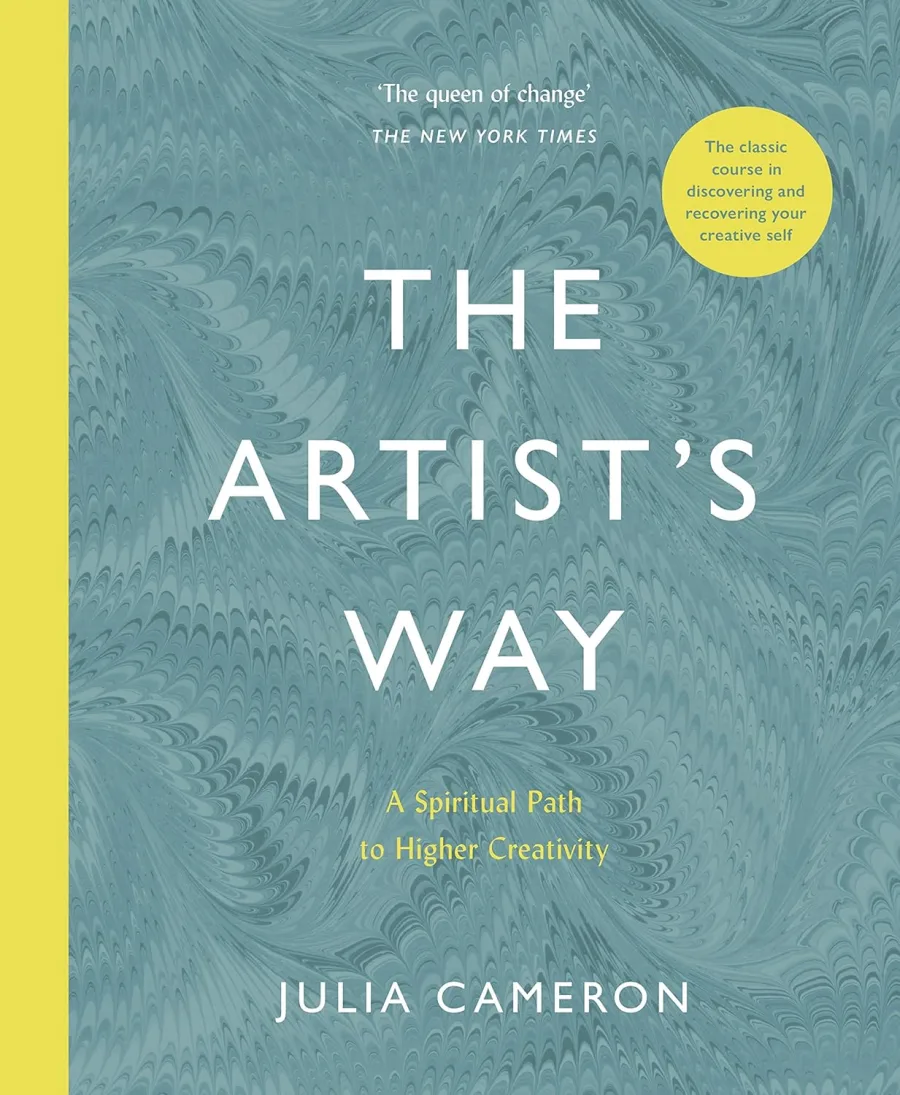
Download Cover Image
Do you want to download the full cover image for The Artist's Way: A Spiritual Path to Higher Creativity?