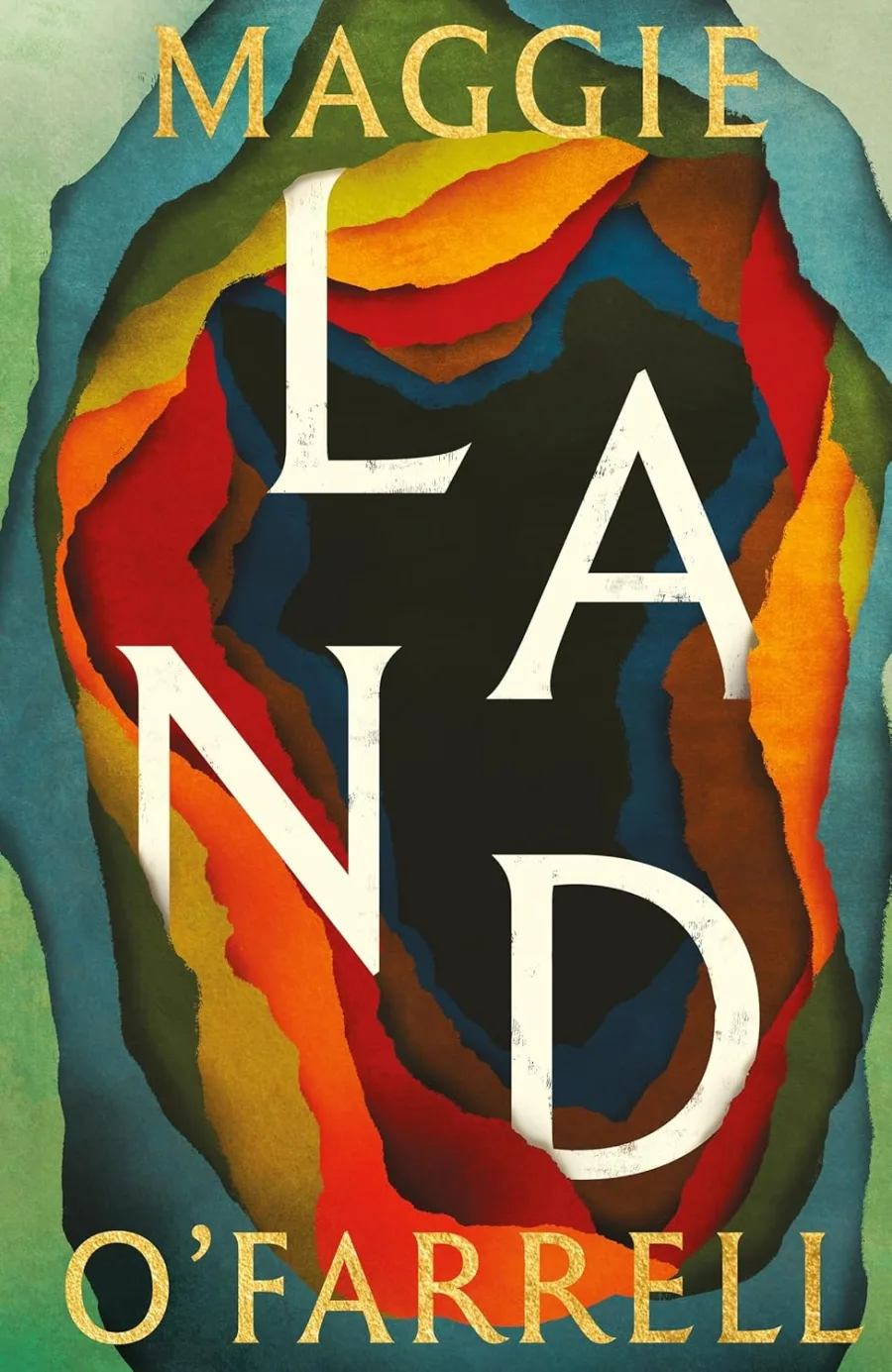
Land
eBook
• 437 Pages
• GBP 11.99
• English
• 9781472289100
No ratings yet
| Publisher | Tinder Press |
|---|---|
| ISBN13 | 9781472289100 |
| ASIN/SKU | B0FNMFNQ94 |
| Book Format | eBook |
| Language | English |
| Pages | 437 |
| List Price | GBP 11.99 |
| Publishing Date | 20/06/2026 |
| Book Code | BD00067138 |
Buy this Book
Amazon Stores
Ebook Stores
Other Stores
Discover Land by Maggie O'Farrell. This book is published by Tinder Press in eBook format, ISBN 9781472289100, ASIN B0FNMFNQ94, under Literature and Fiction, Historical Fiction, Parenthood and Children Fiction.
Book Description
'You will never understand how the land remembers, how deep the roots grow'
A spellbinding story of separation, longing, recovery and survival as a family makes a new home in the aftermath of tragedy.
'A heart-bursting story of resilience and love' LOUISE KENNEDY
'A story that has such heart' SUNDAY TIMES
'Darkly magical. A brilliant and powerful novel' ALICE WINN
'Magnificent... a feat of the historical imagination' INDEPENDENT
'Full of vigour... O'Farrell excels' NEW YORKER
'As visceral as a novel can get' YAEL VAN DER WOUDEN
On a windswept peninsula stretching out into the Atlantic, Tomás and his reluctant son, Liam, are working for the great Ordnance Survey project to map the whole of Ireland. The year is 1865, and in a country not long since ravaged and emptied by the Great Hunger, the task is not an easy one. Tomás, however, is determined that his maps will be a record of the disaster.
The British soldiers in charge are due to arrive any day, expecting the work to be completed, but Tomás is sent off course by an unsettling encounter in a copse. His life, and those of his family, will never be the same again. Liam is terrified by the sudden change in his taciturn father. What was it that caused such cracks to open in Tomás and how is Liam, aged only ten, going to finish the mapping, and get them both home?
Land is a story of buried treasure, overlapping lives, ancient woodland, persistent ghosts, a particularly loyal dog, and how, when it comes to both land and history, nothing ever goes away.
A spellbinding story of separation, longing, recovery and survival as a family makes a new home in the aftermath of tragedy.
'A heart-bursting story of resilience and love' LOUISE KENNEDY
'A story that has such heart' SUNDAY TIMES
'Darkly magical. A brilliant and powerful novel' ALICE WINN
'Magnificent... a feat of the historical imagination' INDEPENDENT
'Full of vigour... O'Farrell excels' NEW YORKER
'As visceral as a novel can get' YAEL VAN DER WOUDEN
On a windswept peninsula stretching out into the Atlantic, Tomás and his reluctant son, Liam, are working for the great Ordnance Survey project to map the whole of Ireland. The year is 1865, and in a country not long since ravaged and emptied by the Great Hunger, the task is not an easy one. Tomás, however, is determined that his maps will be a record of the disaster.
The British soldiers in charge are due to arrive any day, expecting the work to be completed, but Tomás is sent off course by an unsettling encounter in a copse. His life, and those of his family, will never be the same again. Liam is terrified by the sudden change in his taciturn father. What was it that caused such cracks to open in Tomás and how is Liam, aged only ten, going to finish the mapping, and get them both home?
Land is a story of buried treasure, overlapping lives, ancient woodland, persistent ghosts, a particularly loyal dog, and how, when it comes to both land and history, nothing ever goes away.
Author Biography
Maggie O’Farrell, Fellow of the Royal Society of Literature, is the author of HAMNET, Winner of the Women’s Prize for Fiction 2020, and the memoir I AM, I AM, I AM, both Sunday Times no. 1 bestsellers. Her novels include AFTER YOU’D GONE, MY LOVER’S LOVER, THE DISTANCE BETWEEN US, which won a Somerset Maugham Award, THE VANISHING ACT OF ESME LENNOX, THE HAND THAT FIRST HELD MINE, which won the 2010 Costa Novel Award, INSTRUCTIONS FOR A HEATWAVE and THIS MUST BE THE PLACE, and THE MARRIAGE PORTRAIT. She is also the author of two books for children, WHERE SNOW ANGELS GO and THE BOY WHO LOST HIS SPARK. She lives in Edinburgh.
Editorial Reviews
A deep-mapping of a place and its people, a heart-bursting story of resilience and love. Land is simply the best novel I've read in years — Louise Kennedy
A breathtaking hymn to the sanctity of natural spaces, operating on timescales both intimate and geological. I finished Land moved not only by the vivid lives of its human characters, but the thrumming, gorgeous presence of its mosses, waters, winds and skies — Daniel Mason
Haunting and elemental in its evocation, Land is a novel of startling imagination and power. Upon finishing it, I did not feel so much that I had read a book as lived inside it — Ferdia Lennon
Wondrous and magisterial — Kamila Shamsie
A stunning achievement. Maggie O'Farrell's most ambitious novel yet, and maybe her most moving. I adored it. — Bobby Palmer
Expansive and intimate, this beautiful book swallowed me whole. I loved it, and will miss its characters terribly — Charlotte McConaghy
A work of towering imagination and empathy; a beautifully layered novel, told in lyrical, haunting prose which transforms familiar history into something new and startlingly relevant. To read this novel is to embark on an emotional journey, to lose yourself in the pages of a story that is at once devastating and irrepressibly life affirming. I loved it — Roisín O'Donnell
As visceral as a novel can get — Yael van der Wouden
Land is a vast, darkly magical novel from a masterful writer. Maggie O'Farrell's historical fiction illuminates not only the past, but our own moment in time. A brilliant and powerful novel — Alice Winn
This deep, dense, heartrending novel is the best of Maggie O'Farrell, who is the best of writers, modern and alive, with the detailed brilliance of great nineteenth-century storytellers. All I need as a reader is in Land — Amy Bloom
A stunning and gorgeous epic. . . . O'Farrell paints a devasting yet tender portrait of Irish history — Publishers Weekly, starred review
Land is a hidden grove of a book. Since leaving its pages, the stories hiding in place-names and redacted maps have seemed palpable in my everyday life. I loved the characters, the slowing effect of O'Farrell's prose and her careful splicing of story into history — Amy Jeffs
A visceral and magical story about separation, and our complex relationship with the world beyond words — Rachel Joyce, author of The Homemade God
Beautifully done, with descriptions that are both intricate and locked into character — Scotsman
Evocative and immersive . . . a haunting, beautifully written story of survival and memory — Woman and Home
A breathtaking hymn to the sanctity of natural spaces, operating on timescales both intimate and geological. I finished Land moved not only by the vivid lives of its human characters, but the thrumming, gorgeous presence of its mosses, waters, winds and skies — Daniel Mason
Haunting and elemental in its evocation, Land is a novel of startling imagination and power. Upon finishing it, I did not feel so much that I had read a book as lived inside it — Ferdia Lennon
Wondrous and magisterial — Kamila Shamsie
A stunning achievement. Maggie O'Farrell's most ambitious novel yet, and maybe her most moving. I adored it. — Bobby Palmer
Expansive and intimate, this beautiful book swallowed me whole. I loved it, and will miss its characters terribly — Charlotte McConaghy
A work of towering imagination and empathy; a beautifully layered novel, told in lyrical, haunting prose which transforms familiar history into something new and startlingly relevant. To read this novel is to embark on an emotional journey, to lose yourself in the pages of a story that is at once devastating and irrepressibly life affirming. I loved it — Roisín O'Donnell
As visceral as a novel can get — Yael van der Wouden
Land is a vast, darkly magical novel from a masterful writer. Maggie O'Farrell's historical fiction illuminates not only the past, but our own moment in time. A brilliant and powerful novel — Alice Winn
This deep, dense, heartrending novel is the best of Maggie O'Farrell, who is the best of writers, modern and alive, with the detailed brilliance of great nineteenth-century storytellers. All I need as a reader is in Land — Amy Bloom
A stunning and gorgeous epic. . . . O'Farrell paints a devasting yet tender portrait of Irish history — Publishers Weekly, starred review
Land is a hidden grove of a book. Since leaving its pages, the stories hiding in place-names and redacted maps have seemed palpable in my everyday life. I loved the characters, the slowing effect of O'Farrell's prose and her careful splicing of story into history — Amy Jeffs
A visceral and magical story about separation, and our complex relationship with the world beyond words — Rachel Joyce, author of The Homemade God
Beautifully done, with descriptions that are both intricate and locked into character — Scotsman
Evocative and immersive . . . a haunting, beautifully written story of survival and memory — Woman and Home
Book Summary
Land by Maggie O'Farrell is a powerful historical novel set in Ireland during the years following the Great Famine. Combining history, family drama, folklore, and nature, the novel explores how people carry the memories of loss across generations and how the land itself becomes a silent witness to both suffering and survival. At its heart, the story is about identity, belonging, and the deep relationship between people and the places they call home. Through rich storytelling and emotionally layered characters, Maggie O'Farrell creates a novel that is both intimate and epic in scale.
The story begins in 1865, when Ireland is still recovering from the devastating effects of the Great Famine. Tomás, a skilled Irish mapmaker, is employed by the British-led Ordnance Survey, a project designed to map Ireland and replace many traditional Irish place names with English ones. Although the work offers financial security, it also places Tomás in a difficult position. He understands that maps are more than simple drawings of land—they shape history, identity, and memory. Quietly burdened by the suffering he has witnessed, he hopes to preserve the scars left by the famine instead of allowing them to disappear beneath official records.
Tomás is accompanied by his young son, Liam, who admires his father but struggles to understand him. During their journey across a remote peninsula on Ireland's western coast, Tomás has an unusual and deeply unsettling experience in an ancient woodland surrounding a mysterious spring. The encounter changes him in ways that neither he nor Liam can fully explain. He becomes increasingly convinced that the land possesses its own memory and spirit, and that his work should honor those hidden stories rather than erase them. This transformation leaves Liam confused and frightened, as he watches his practical and reserved father become consumed by a powerful sense of purpose.
As Tomás's beliefs deepen, he makes decisions that alter the future of his entire family. They leave behind the familiarity of Dublin and settle on the isolated peninsula, hoping to build a new life. However, adapting to such a remote place proves difficult. Each family member responds differently to the challenges they face. Tomás remains devoted to documenting the true history of the landscape, while Liam seeks certainty in religion and gradually distances himself from his father's increasingly unconventional ideas. Their differing beliefs create emotional distance between them, even though both love each other deeply.
The novel gradually widens its focus beyond Tomás and Liam. Their family grows, and readers are introduced to other memorable characters, including Tomás's daughters, Enda and Rose, and his youngest child, Eugene. Each of them develops a unique relationship with the land they inhabit. Enda dreams of a larger world beyond the isolated coast and eventually seeks opportunities elsewhere, carrying memories of Ireland wherever she goes. Rose longs for stability and connection, while Eugene develops an especially quiet but profound understanding of the natural world around him. Their individual journeys reflect the many ways people experience home, displacement, and belonging.
O'Farrell also moves beyond a single family, weaving together stories from different periods of Irish history. The narrative occasionally reaches far into the past, introducing earlier inhabitants of the same landscape and suggesting that countless lives have unfolded on the same ground over centuries. Ancient myths, local legends, and hints of the supernatural blend naturally with historical events, creating the sense that the land itself remembers every generation that has walked across it. Rather than presenting history as a sequence of isolated events, the novel portrays it as a continuous thread connecting people separated by hundreds of years.
Family relationships remain central throughout the story. Parents and children often struggle to understand one another, yet their lives remain deeply connected. Tomás wants to protect Ireland's history, while Liam desires security and certainty in a changing world. The emotional conflicts between them are never simple, and neither character is presented as completely right or wrong. Instead, the novel explores how love can exist alongside disappointment, misunderstanding, and differing beliefs. These family dynamics give the historical setting a deeply personal emotional core.
One of the novel's strongest themes is the connection between land and identity. The landscape is not simply a backdrop for the events of the story but almost a living presence. Mountains, forests, rivers, and fields hold memories that official maps cannot capture. The British survey seeks to measure and rename the country, but Tomás believes that the true spirit of Ireland cannot be reduced to coordinates and boundaries. The novel suggests that every path, tree, and stone carries stories of those who lived, struggled, and died there. Through this idea, O'Farrell examines the lasting effects of colonization and the importance of preserving cultural memory.
Grief and resilience are equally important themes. Nearly every character carries some form of loss, whether caused by famine, migration, separation, or death. Yet the novel is never overwhelmed by sadness. Instead, it shows how people continue living despite hardship, finding hope through family, community, love, and the natural world. Survival is presented not simply as endurance but as an act of preserving memory and passing it forward to future generations.
By the final chapters, the novel spans decades, showing how individual lives become part of a much larger history. Some characters leave Ireland while others remain, but all continue to be shaped by their connection to the land they once knew. Their stories demonstrate that although people may move away or generations may pass, the bonds between family, history, and place cannot easily be broken. The land remembers even when people forget, and those memories continue to influence the future.
Overall, Land is a beautifully written historical novel that combines emotional storytelling with rich historical detail. Maggie O'Farrell explores themes of family, memory, identity, colonialism, and the enduring relationship between people and nature with remarkable sensitivity. Rather than focusing solely on historical events, she brings history to life through unforgettable characters whose personal struggles reflect the larger story of a nation recovering from tragedy. The result is a thoughtful and moving novel that reminds readers that every landscape carries hidden stories and that understanding the past is essential to understanding ourselves.
The story begins in 1865, when Ireland is still recovering from the devastating effects of the Great Famine. Tomás, a skilled Irish mapmaker, is employed by the British-led Ordnance Survey, a project designed to map Ireland and replace many traditional Irish place names with English ones. Although the work offers financial security, it also places Tomás in a difficult position. He understands that maps are more than simple drawings of land—they shape history, identity, and memory. Quietly burdened by the suffering he has witnessed, he hopes to preserve the scars left by the famine instead of allowing them to disappear beneath official records.
Tomás is accompanied by his young son, Liam, who admires his father but struggles to understand him. During their journey across a remote peninsula on Ireland's western coast, Tomás has an unusual and deeply unsettling experience in an ancient woodland surrounding a mysterious spring. The encounter changes him in ways that neither he nor Liam can fully explain. He becomes increasingly convinced that the land possesses its own memory and spirit, and that his work should honor those hidden stories rather than erase them. This transformation leaves Liam confused and frightened, as he watches his practical and reserved father become consumed by a powerful sense of purpose.
As Tomás's beliefs deepen, he makes decisions that alter the future of his entire family. They leave behind the familiarity of Dublin and settle on the isolated peninsula, hoping to build a new life. However, adapting to such a remote place proves difficult. Each family member responds differently to the challenges they face. Tomás remains devoted to documenting the true history of the landscape, while Liam seeks certainty in religion and gradually distances himself from his father's increasingly unconventional ideas. Their differing beliefs create emotional distance between them, even though both love each other deeply.
The novel gradually widens its focus beyond Tomás and Liam. Their family grows, and readers are introduced to other memorable characters, including Tomás's daughters, Enda and Rose, and his youngest child, Eugene. Each of them develops a unique relationship with the land they inhabit. Enda dreams of a larger world beyond the isolated coast and eventually seeks opportunities elsewhere, carrying memories of Ireland wherever she goes. Rose longs for stability and connection, while Eugene develops an especially quiet but profound understanding of the natural world around him. Their individual journeys reflect the many ways people experience home, displacement, and belonging.
O'Farrell also moves beyond a single family, weaving together stories from different periods of Irish history. The narrative occasionally reaches far into the past, introducing earlier inhabitants of the same landscape and suggesting that countless lives have unfolded on the same ground over centuries. Ancient myths, local legends, and hints of the supernatural blend naturally with historical events, creating the sense that the land itself remembers every generation that has walked across it. Rather than presenting history as a sequence of isolated events, the novel portrays it as a continuous thread connecting people separated by hundreds of years.
Family relationships remain central throughout the story. Parents and children often struggle to understand one another, yet their lives remain deeply connected. Tomás wants to protect Ireland's history, while Liam desires security and certainty in a changing world. The emotional conflicts between them are never simple, and neither character is presented as completely right or wrong. Instead, the novel explores how love can exist alongside disappointment, misunderstanding, and differing beliefs. These family dynamics give the historical setting a deeply personal emotional core.
One of the novel's strongest themes is the connection between land and identity. The landscape is not simply a backdrop for the events of the story but almost a living presence. Mountains, forests, rivers, and fields hold memories that official maps cannot capture. The British survey seeks to measure and rename the country, but Tomás believes that the true spirit of Ireland cannot be reduced to coordinates and boundaries. The novel suggests that every path, tree, and stone carries stories of those who lived, struggled, and died there. Through this idea, O'Farrell examines the lasting effects of colonization and the importance of preserving cultural memory.
Grief and resilience are equally important themes. Nearly every character carries some form of loss, whether caused by famine, migration, separation, or death. Yet the novel is never overwhelmed by sadness. Instead, it shows how people continue living despite hardship, finding hope through family, community, love, and the natural world. Survival is presented not simply as endurance but as an act of preserving memory and passing it forward to future generations.
By the final chapters, the novel spans decades, showing how individual lives become part of a much larger history. Some characters leave Ireland while others remain, but all continue to be shaped by their connection to the land they once knew. Their stories demonstrate that although people may move away or generations may pass, the bonds between family, history, and place cannot easily be broken. The land remembers even when people forget, and those memories continue to influence the future.
Overall, Land is a beautifully written historical novel that combines emotional storytelling with rich historical detail. Maggie O'Farrell explores themes of family, memory, identity, colonialism, and the enduring relationship between people and nature with remarkable sensitivity. Rather than focusing solely on historical events, she brings history to life through unforgettable characters whose personal struggles reflect the larger story of a nation recovering from tragedy. The result is a thoughtful and moving novel that reminds readers that every landscape carries hidden stories and that understanding the past is essential to understanding ourselves.
Sample Chapters
Sample Chapters will be added soon…
Reader Reviews
No reviews yet.
Land