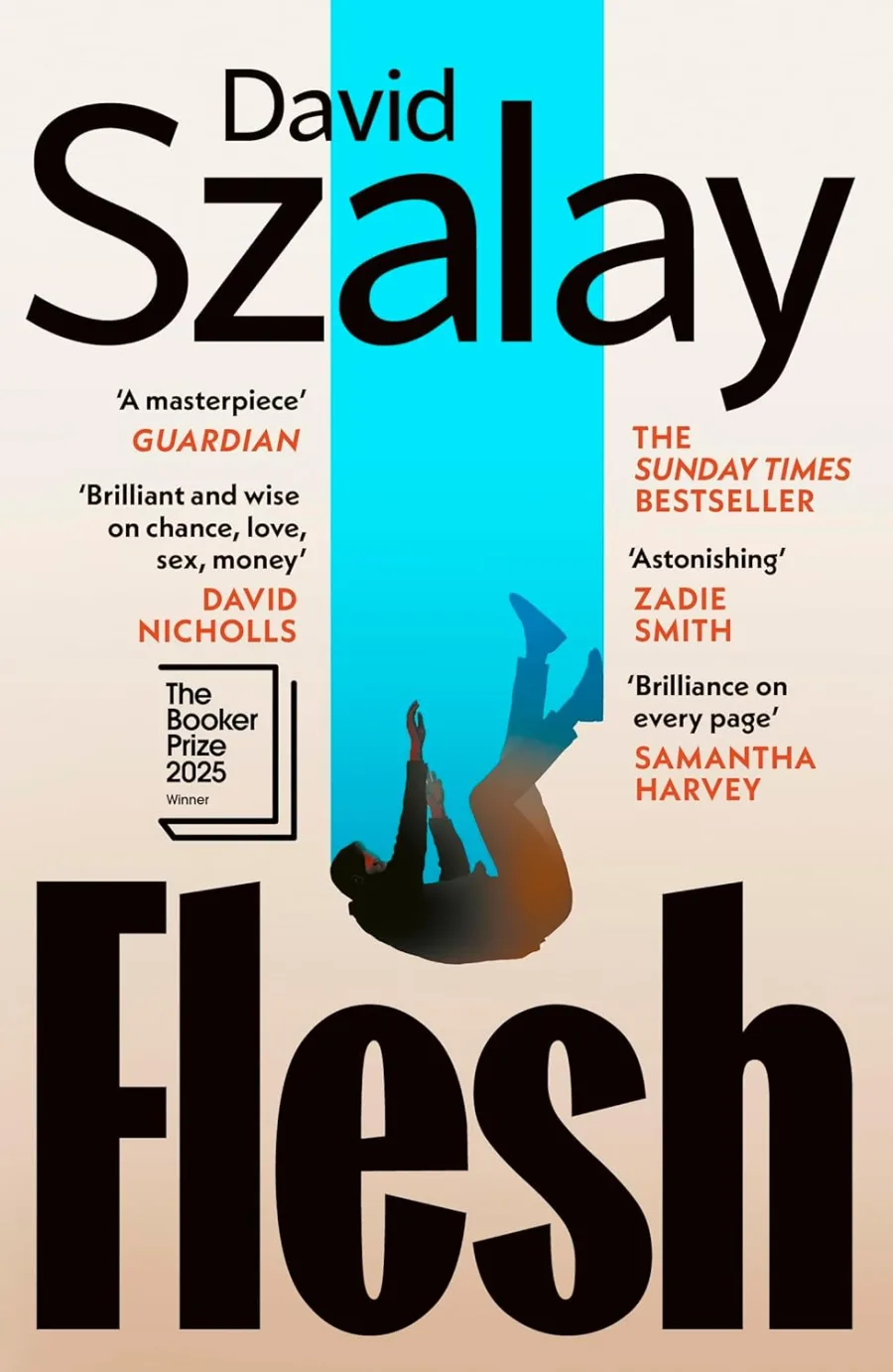
Flesh
eBook
• 341 Pages
• GBP 0.99
• English
• 9781529926842
No ratings yet
| Publisher | Vintage Digital |
|---|---|
| ISBN13 | 9781529926842 |
| ASIN/SKU | B0D89HYH3T |
| Book Format | eBook |
| Language | English |
| Pages | 341 |
| List Price | GBP 0.99 |
| Publishing Date | 06/03/2025 |
| Book Code | BD00067120 |
Buy this Book
Amazon Stores
Ebook Stores
Other Stores
Discover Flesh by David Szalay. This book is published by Vintage Digital in eBook format, ISBN 9781529926842, ASIN B0D89HYH3T, under Literature and Fiction, Contemporary.
Book Description
‘Brilliant and wise on chance, love, sex, money’ David Nicholls
‘I was tearing through [Flesh], I never once slowed down’ Jennette McCurdy
‘Brilliance on every page’ Samantha Harvey
‘So much searing insight into the way we live now’ Observer
Through chance, luck and choice, one man’s life takes him from a modest apartment in Hungary to the elite society of London – in this captivating new novel about the forces that make and break our lives
Fifteen-year-old István lives with his mother in a quiet apartment complex in Hungary. New to the town and shy, he becomes isolated, with his neighbour – a married woman – as his only companion. When a clandestine relationship begins between them, his life spirals out of control.
As the years pass, István moves from the army to the circles of London’s elite. His competing impulses for love, intimacy, status and wealth win him unimaginable riches, until they threaten to undo him completely.
‘I was tearing through [Flesh], I never once slowed down’ Jennette McCurdy
‘Brilliance on every page’ Samantha Harvey
‘So much searing insight into the way we live now’ Observer
Through chance, luck and choice, one man’s life takes him from a modest apartment in Hungary to the elite society of London – in this captivating new novel about the forces that make and break our lives
Fifteen-year-old István lives with his mother in a quiet apartment complex in Hungary. New to the town and shy, he becomes isolated, with his neighbour – a married woman – as his only companion. When a clandestine relationship begins between them, his life spirals out of control.
As the years pass, István moves from the army to the circles of London’s elite. His competing impulses for love, intimacy, status and wealth win him unimaginable riches, until they threaten to undo him completely.
Author Biography
David Szalay is the author of six works of fiction, including London and the South-East, for which he was awarded the Betty Trask and Geoffrey Faber Memorial prizes, All That Man Is, for which he was awarded the Gordon Burn Prize and Plimpton Prize for Fiction and shortlisted for the Booker Prize, and Turbulence, which won the Edge Hill Prize. Born in Canada, he grew up in London, and now lives in Vienna. His work has been translated into more than thirty languages.
Editorial Reviews
Flesh is at once intricate and spacious, it flows both fast and deep. There's brilliance on every page. Szalay is an ingenious conductor of time, and of the fates and forces that give shape to a life — Samantha Harvey, author of Orbital
Flesh is a wonderful novel – so brilliant and wise on chance, love, sex, money — David Nicholls
A superb novel, written with great terse authority and allure: mordant, knowing and disturbingly wise — William Boyd
This is a marvellous novel. Compelling and elegant, merciless and poignant. David Szalay is an extraordinary writer — Tessa Hadley
I hope David Szalay wins the Booker this year...Flesh is a masterpiece, told with virtuosic economy...Pure brilliance from the first to the (devastating) last sentence — India Knight
Refreshing, illuminating and true… a moving work of art with a plot that compels and surprises and devastates — Financial Times
[A] compulsive look at wealth and power, love and sex… Szalay has that rare ability to convey entire galaxies in the sparest writing — i
Flesh…has ensnared me… It’s rare to find prose this spare that doesn’t feel affect, but Szalay handles surface and depth with skill, as only great novelists can. Flesh is a revelatory novel — Sunday Times
Hypnotically tense and compelling… An astonishingly moving portrait of a man’s life — Booker Judges, 2025
In István David Szalay has created a modern existential antihero in the grand tradition of Camus and Dostoevsky. Amid the random accidents and desultory decisions that shape his life, and come to feel like fate, he is at once a cool observer and a towering presence. Taut, spare and perfectly structured, Flesh reads like a gripping thriller which slowly gathers to itself the emotional power of classical tragedy — Carys Davies, author of Clear
Flesh is a wonderful novel – so brilliant and wise on chance, love, sex, money — David Nicholls
A superb novel, written with great terse authority and allure: mordant, knowing and disturbingly wise — William Boyd
This is a marvellous novel. Compelling and elegant, merciless and poignant. David Szalay is an extraordinary writer — Tessa Hadley
I hope David Szalay wins the Booker this year...Flesh is a masterpiece, told with virtuosic economy...Pure brilliance from the first to the (devastating) last sentence — India Knight
Refreshing, illuminating and true… a moving work of art with a plot that compels and surprises and devastates — Financial Times
[A] compulsive look at wealth and power, love and sex… Szalay has that rare ability to convey entire galaxies in the sparest writing — i
Flesh…has ensnared me… It’s rare to find prose this spare that doesn’t feel affect, but Szalay handles surface and depth with skill, as only great novelists can. Flesh is a revelatory novel — Sunday Times
Hypnotically tense and compelling… An astonishingly moving portrait of a man’s life — Booker Judges, 2025
In István David Szalay has created a modern existential antihero in the grand tradition of Camus and Dostoevsky. Amid the random accidents and desultory decisions that shape his life, and come to feel like fate, he is at once a cool observer and a towering presence. Taut, spare and perfectly structured, Flesh reads like a gripping thriller which slowly gathers to itself the emotional power of classical tragedy — Carys Davies, author of Clear
Book Summary
Flesh by David Szalay is a thoughtful and emotionally complex novel that explores the relationship between the body, desire, ambition, loneliness, and the search for meaning. The story follows the life of a man named István, tracing his journey from a difficult childhood in Hungary to adulthood, where his choices and circumstances gradually shape the person he becomes. Through his experiences, the novel examines how people are often driven as much by physical needs and chance encounters as by conscious decisions, revealing the fragile balance between control and fate.
István grows up in a poor neighborhood on the outskirts of Budapest. His childhood is marked by instability, emotional distance, and limited opportunities. He has little confidence in himself and rarely imagines a future beyond the world he already knows. Although he is physically attractive and naturally strong, he lacks education, ambition, and the social skills needed to escape his surroundings. He often feels disconnected from others, struggling to understand both his own emotions and the expectations of the people around him. His quiet nature makes him an observer rather than an active participant in many aspects of life.
As a teenager, István becomes involved in a relationship that has a profound effect on him. The affair awakens both emotional and physical desires that he does not fully understand, exposing him to the complicated nature of intimacy and power. Rather than giving him stability, the relationship leaves him even more uncertain about his place in the world. It becomes one of several moments in which desire shapes the direction of his life more strongly than careful planning or personal ambition.
Seeking a better future, István eventually joins the military. Life in the army offers discipline and structure that contrast sharply with the disorder of his childhood. Although military service provides a sense of purpose, it also introduces him to new forms of authority, violence, and isolation. The routines and demands of military life harden him, but they do not answer the deeper questions about identity and belonging that continue to trouble him. Instead, he drifts through experiences without developing a clear vision of who he wants to become.
As the years pass, István's appearance and physical presence repeatedly influence the opportunities available to him. His attractiveness draws the attention of people from wealthier and more privileged backgrounds, allowing him access to worlds that would otherwise remain closed. Yet these opportunities are rarely based on his talents or ambitions. Instead, they depend largely on how others perceive and desire him. This creates an uneasy imbalance in his relationships, as he often becomes an object of fascination rather than someone truly understood or valued.
The novel follows István through different countries and social classes, showing how dramatically his surroundings change while his inner uncertainty remains remarkably constant. He encounters people who possess wealth, influence, and sophistication, but he never feels fully at home among them. Although material comfort becomes more accessible, emotional fulfillment continues to elude him. Szalay presents success not as a straightforward achievement but as something deeply complicated, suggesting that changing one's external circumstances does not necessarily resolve internal conflicts.
Throughout the story, physical attraction plays a central role in shaping human relationships. Characters are drawn together by desire, yet those connections often prove temporary or incomplete. Love, lust, dependency, and loneliness frequently overlap, making it difficult to separate genuine affection from emotional need or personal advantage. István himself rarely understands his own motivations, acting more from instinct than careful reflection. His inability to express his feelings openly creates distance between himself and those closest to him, reinforcing his sense of isolation.
One of the novel's greatest strengths lies in its realistic portrayal of ordinary life. Rather than relying on dramatic twists or sentimental moments, Szalay focuses on the quiet accumulation of everyday choices and consequences. Small decisions gradually alter the course of István's life, illustrating how personal history is often shaped by coincidence as much as intention. The narrative avoids simple moral judgments, presenting its characters as flawed individuals trying to navigate complicated emotional landscapes.
The contrast between social classes is another important theme. As István moves from poverty into environments filled with privilege and luxury, he observes the hidden vulnerabilities of wealthy people alongside their obvious advantages. Money provides comfort and opportunity, but it cannot eliminate insecurity, aging, or emotional dissatisfaction. In this way, the novel suggests that loneliness and uncertainty exist across every level of society, even if they take different forms.
The title, Flesh, reflects the novel's central concern with the physical realities of human existence. Bodies become sources of attraction, pleasure, labor, aging, illness, and vulnerability. The story repeatedly reminds readers that much of life is shaped by physical existence, even while people search for deeper meaning and emotional connection. Szalay explores how the body can both open doors and create limitations, influencing relationships, identity, and self-worth in ways that are often beyond conscious control.
Szalay's writing is calm, precise, and deeply observant. His prose is understated, allowing emotions to emerge naturally through actions rather than dramatic declarations. Much of the novel's emotional power comes from what remains unsaid, inviting readers to reflect on the quiet disappointments and fleeting moments of happiness that define ordinary lives. István is neither portrayed as a hero nor a villain but as an ordinary man carried through life by circumstance, desire, and the gradual passage of time.
Ultimately, Flesh is a reflective novel about what it means to inhabit both a body and a life that are shaped by forces beyond complete control. It explores the tension between freedom and fate, showing how people often discover themselves through experiences they never intended to have. Rather than offering easy answers, the novel leaves readers considering the complex ways in which love, ambition, class, physicality, and chance intersect. It is a subtle and deeply human story that examines the ordinary struggles of finding connection and purpose in an unpredictable world, making it a powerful meditation on the nature of modern existence.
István grows up in a poor neighborhood on the outskirts of Budapest. His childhood is marked by instability, emotional distance, and limited opportunities. He has little confidence in himself and rarely imagines a future beyond the world he already knows. Although he is physically attractive and naturally strong, he lacks education, ambition, and the social skills needed to escape his surroundings. He often feels disconnected from others, struggling to understand both his own emotions and the expectations of the people around him. His quiet nature makes him an observer rather than an active participant in many aspects of life.
As a teenager, István becomes involved in a relationship that has a profound effect on him. The affair awakens both emotional and physical desires that he does not fully understand, exposing him to the complicated nature of intimacy and power. Rather than giving him stability, the relationship leaves him even more uncertain about his place in the world. It becomes one of several moments in which desire shapes the direction of his life more strongly than careful planning or personal ambition.
Seeking a better future, István eventually joins the military. Life in the army offers discipline and structure that contrast sharply with the disorder of his childhood. Although military service provides a sense of purpose, it also introduces him to new forms of authority, violence, and isolation. The routines and demands of military life harden him, but they do not answer the deeper questions about identity and belonging that continue to trouble him. Instead, he drifts through experiences without developing a clear vision of who he wants to become.
As the years pass, István's appearance and physical presence repeatedly influence the opportunities available to him. His attractiveness draws the attention of people from wealthier and more privileged backgrounds, allowing him access to worlds that would otherwise remain closed. Yet these opportunities are rarely based on his talents or ambitions. Instead, they depend largely on how others perceive and desire him. This creates an uneasy imbalance in his relationships, as he often becomes an object of fascination rather than someone truly understood or valued.
The novel follows István through different countries and social classes, showing how dramatically his surroundings change while his inner uncertainty remains remarkably constant. He encounters people who possess wealth, influence, and sophistication, but he never feels fully at home among them. Although material comfort becomes more accessible, emotional fulfillment continues to elude him. Szalay presents success not as a straightforward achievement but as something deeply complicated, suggesting that changing one's external circumstances does not necessarily resolve internal conflicts.
Throughout the story, physical attraction plays a central role in shaping human relationships. Characters are drawn together by desire, yet those connections often prove temporary or incomplete. Love, lust, dependency, and loneliness frequently overlap, making it difficult to separate genuine affection from emotional need or personal advantage. István himself rarely understands his own motivations, acting more from instinct than careful reflection. His inability to express his feelings openly creates distance between himself and those closest to him, reinforcing his sense of isolation.
One of the novel's greatest strengths lies in its realistic portrayal of ordinary life. Rather than relying on dramatic twists or sentimental moments, Szalay focuses on the quiet accumulation of everyday choices and consequences. Small decisions gradually alter the course of István's life, illustrating how personal history is often shaped by coincidence as much as intention. The narrative avoids simple moral judgments, presenting its characters as flawed individuals trying to navigate complicated emotional landscapes.
The contrast between social classes is another important theme. As István moves from poverty into environments filled with privilege and luxury, he observes the hidden vulnerabilities of wealthy people alongside their obvious advantages. Money provides comfort and opportunity, but it cannot eliminate insecurity, aging, or emotional dissatisfaction. In this way, the novel suggests that loneliness and uncertainty exist across every level of society, even if they take different forms.
The title, Flesh, reflects the novel's central concern with the physical realities of human existence. Bodies become sources of attraction, pleasure, labor, aging, illness, and vulnerability. The story repeatedly reminds readers that much of life is shaped by physical existence, even while people search for deeper meaning and emotional connection. Szalay explores how the body can both open doors and create limitations, influencing relationships, identity, and self-worth in ways that are often beyond conscious control.
Szalay's writing is calm, precise, and deeply observant. His prose is understated, allowing emotions to emerge naturally through actions rather than dramatic declarations. Much of the novel's emotional power comes from what remains unsaid, inviting readers to reflect on the quiet disappointments and fleeting moments of happiness that define ordinary lives. István is neither portrayed as a hero nor a villain but as an ordinary man carried through life by circumstance, desire, and the gradual passage of time.
Ultimately, Flesh is a reflective novel about what it means to inhabit both a body and a life that are shaped by forces beyond complete control. It explores the tension between freedom and fate, showing how people often discover themselves through experiences they never intended to have. Rather than offering easy answers, the novel leaves readers considering the complex ways in which love, ambition, class, physicality, and chance intersect. It is a subtle and deeply human story that examines the ordinary struggles of finding connection and purpose in an unpredictable world, making it a powerful meditation on the nature of modern existence.
Sample Chapters
Sample Chapters will be added soon…
Reader Reviews
No reviews yet.
Flesh