
The Correspondent
eBook
• 271 Pages
• GBP 6.99
• English
• 9780241721278
No ratings yet
| Publisher | Michael Joseph |
|---|---|
| ISBN13 | 9780241721278 |
| ASIN/SKU | B0DCZ3P72G |
| Book Format | eBook |
| Language | English |
| Pages | 271 |
| List Price | GBP 6.99 |
| Publishing Date | 29/04/2025 |
| Book Code | BD00067103 |
Buy this Book
Amazon Stores
Ebook Stores
Other Stores
Discover The Correspondent by Virginia Evans. This book is published by Michael Joseph in eBook format, ISBN 9780241721278, ASIN B0DCZ3P72G, under Humor and Entertainment, Fiction.
Book Description
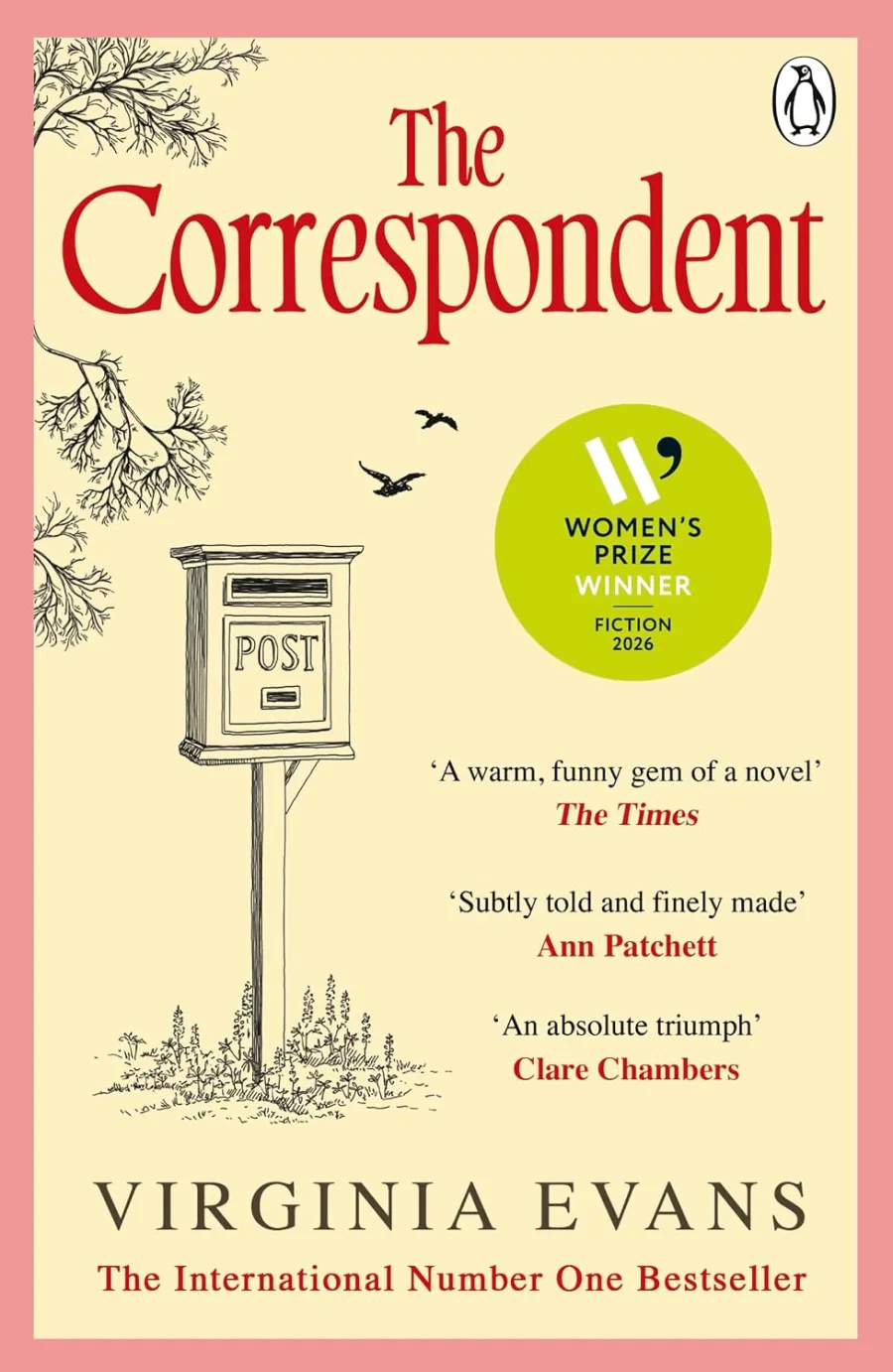
WINNER OF THE WOMEN'S PRIZE FOR FICTION 2026
A SUNDAY TIMES BESTSELLER
THE #1 NEW YORK TIMES BESTSELLER
OVER TWO MILLION COPIES SOLD WORLDWIDE
A TIMESBOOK OF THE YEAR 2025
AN IRISH TIMES BESTSELLER
A BBC RADIO 2 BOOK CLUB PICK
'A warm, funny gem of a novel'
LAURA HACKETT, THE TIMES
'Masterful . . . I was delighted and moved'
NEW YORK TIMES
'I can't praise it enough. It's an absolute triumph'
CLARE CHAMBERS
'What a novel! Tender, dry, sharp...devastating, but still feel good.'
PANDORA SYKES
'Tremendous'
FREDRIK BACKMAN
'Shows us what a glorious thing growing older can be'
FLORENCE KNAPP
'The year's breakout novel no one saw coming'
WALL STREET JOURNAL
–
Sybil Van Antwerp is seventy-three, slowly losing her sight and always writing letters . . .
To her children. Her favourite authors. Her ex-sister-in-law. The journalist poking into her past.
Her doctor. Suitors. Kindly neighbours. The infuriating gardening club.
All receive Sybil’s witty, wise correspondence, rich with everyday concerns.
But there is one letter that she has never sent. It concerns the darkest period of her life. To post it, Sybil must find forgiveness within herself.
The hardest letter to write is the one you’d never dare to send.
A SUNDAY TIMES BESTSELLER
THE #1 NEW YORK TIMES BESTSELLER
OVER TWO MILLION COPIES SOLD WORLDWIDE
A TIMESBOOK OF THE YEAR 2025
AN IRISH TIMES BESTSELLER
A BBC RADIO 2 BOOK CLUB PICK
'A warm, funny gem of a novel'
LAURA HACKETT, THE TIMES
'Masterful . . . I was delighted and moved'
NEW YORK TIMES
'I can't praise it enough. It's an absolute triumph'
CLARE CHAMBERS
'What a novel! Tender, dry, sharp...devastating, but still feel good.'
PANDORA SYKES
'Tremendous'
FREDRIK BACKMAN
'Shows us what a glorious thing growing older can be'
FLORENCE KNAPP
'The year's breakout novel no one saw coming'
WALL STREET JOURNAL
–
Sybil Van Antwerp is seventy-three, slowly losing her sight and always writing letters . . .
To her children. Her favourite authors. Her ex-sister-in-law. The journalist poking into her past.
Her doctor. Suitors. Kindly neighbours. The infuriating gardening club.
All receive Sybil’s witty, wise correspondence, rich with everyday concerns.
But there is one letter that she has never sent. It concerns the darkest period of her life. To post it, Sybil must find forgiveness within herself.
The hardest letter to write is the one you’d never dare to send.
Author Biography
Virginia Evans is from the east coast of the United States. She attended James Madison University for her bachelor’s in English literature. After starting a family, she went back to school for her master’s of philosophy in creative writing at Trinity College in Dublin, Ireland, where she had the good fortune to study under Carlo Gébler, Eoin McNamee, Claire Keegan, Harry Clifton and Kevin Power. She now lives in Winston-Salem, North Carolina, with her husband, Mark, two children, Jack and Mae, and her Red Labrador, Brigid.
Editorial Reviews
I was delighted and moved . . . Evans does an expert job at making you root for [Sybil] even as you want to give her a timeout . . . Masterful — New York Times
This is the novel I'm giving to everyone for Christmas...The Correspondent is a delight: melancholy without being sentimental, warm without being cosy, witty without being silly... The comparisons to Strout are accurate but this novel also reminded me of Anne Tyler's ability to make the domestic dramatic... An ode to a dying art form, and proof that your life is never too decided to make a change. — Laura Hackett, The Times
A warm, funny gem of a novel . . . It’s a clever conceit, which Virginia Evans uses to great effect in a novel that is melancholic without being sentimental. One for fans of Elizabeth Strout. — The Times, Best Books of 2025
Subtly told and finely made, The Correspondent is a portrait of a small life expanding. Virginia Evans shows how one woman changes at a point when change had seemed impossible. That change, like this novel, turns out to be a cause for celebration — Ann Patchett, bestselling author of TOM LAKE
‘A masterclass in how to put words on human frailty. This debut does not put a foot wrong. Smart and clever . . . Evans is a confident, competent author in whom we can trust’ — Irish Times
I can't praise it enough. Sybil is such a wonderful character, and the supporting cast so vivid and real. For a book about grief and regret it is also properly funny. It's an absolute triumph — Clare Chambers, bestselling author of SMALL PLEASURES
Open-hearted with some, a hedgehog curled tight in a ball with others, I cried more than once as I witnessed this brilliant woman come to understand herself more deeply and risk lowering her defences. Both serious and uplifting, in The Correspondent, Virginia Evans shows us what a glorious thing growing older can be — Florence Knapp, author of THE NAMES
This novel is a complete and utter joy. — Ann Napolitano, bestselling author of HELLO BEAUTIFUL
I'm kind of speechless at how good this was. How unexpectedly perfect and profoundly moving. It is so rare that a novel surprises you, but this one certainly did. I loved it. Felt cradled by it. Moved, and hurt, and healed. It’s a masterclass in the passage of time, in showing, not telling. In humility and redemption and how to love. I couldn’t look away. It is genius. It is tender. It has left me bruised, and grateful, and in tears. One of my best reads of the year. — Claire Daverley, author of TALKING AT NIGHT
Beautiful. A quietly brilliant debut that I didn’t want to put down. Sybil is one of the most rounded, real, fascinating characters I've read in a long time. — BETH O'LEARY
This is the novel I'm giving to everyone for Christmas...The Correspondent is a delight: melancholy without being sentimental, warm without being cosy, witty without being silly... The comparisons to Strout are accurate but this novel also reminded me of Anne Tyler's ability to make the domestic dramatic... An ode to a dying art form, and proof that your life is never too decided to make a change. — Laura Hackett, The Times
A warm, funny gem of a novel . . . It’s a clever conceit, which Virginia Evans uses to great effect in a novel that is melancholic without being sentimental. One for fans of Elizabeth Strout. — The Times, Best Books of 2025
Subtly told and finely made, The Correspondent is a portrait of a small life expanding. Virginia Evans shows how one woman changes at a point when change had seemed impossible. That change, like this novel, turns out to be a cause for celebration — Ann Patchett, bestselling author of TOM LAKE
‘A masterclass in how to put words on human frailty. This debut does not put a foot wrong. Smart and clever . . . Evans is a confident, competent author in whom we can trust’ — Irish Times
I can't praise it enough. Sybil is such a wonderful character, and the supporting cast so vivid and real. For a book about grief and regret it is also properly funny. It's an absolute triumph — Clare Chambers, bestselling author of SMALL PLEASURES
Open-hearted with some, a hedgehog curled tight in a ball with others, I cried more than once as I witnessed this brilliant woman come to understand herself more deeply and risk lowering her defences. Both serious and uplifting, in The Correspondent, Virginia Evans shows us what a glorious thing growing older can be — Florence Knapp, author of THE NAMES
This novel is a complete and utter joy. — Ann Napolitano, bestselling author of HELLO BEAUTIFUL
I'm kind of speechless at how good this was. How unexpectedly perfect and profoundly moving. It is so rare that a novel surprises you, but this one certainly did. I loved it. Felt cradled by it. Moved, and hurt, and healed. It’s a masterclass in the passage of time, in showing, not telling. In humility and redemption and how to love. I couldn’t look away. It is genius. It is tender. It has left me bruised, and grateful, and in tears. One of my best reads of the year. — Claire Daverley, author of TALKING AT NIGHT
Beautiful. A quietly brilliant debut that I didn’t want to put down. Sybil is one of the most rounded, real, fascinating characters I've read in a long time. — BETH O'LEARY
Book Summary
The Correspondent by Virginia Evans is a thoughtful and deeply moving novel told entirely through letters and emails. Through this unique format, the story follows Sybil Van Antwerp, a retired lawyer in her seventies whose lifelong habit of writing letters becomes a way of reflecting on her past, maintaining relationships, and making peace with regrets she has carried for decades. Rather than relying on dramatic events, the novel unfolds through everyday correspondence, revealing the richness of an ordinary life filled with love, loss, mistakes, and hope. It is ultimately a story about memory, forgiveness, aging, and the enduring importance of human connection.
Every morning, Sybil follows the same comforting routine. She sits at her desk and writes letters to the people who matter to her. Some are sent to family members, including her brother and grandchildren. Others go to close friends, former colleagues, and even authors whose books have shaped her thinking. She also writes to institutions and strangers whenever she feels strongly about an issue. Letter writing has always been her preferred way of communicating because it allows her to carefully choose her words and express emotions she often struggles to share in conversation. Through these letters, readers gradually come to know not only Sybil's present life but also the many experiences that have shaped her over the years.
Although Sybil appears organized and independent, her letters reveal a woman quietly carrying the weight of old regrets. She has enjoyed a successful legal career, raised a family, experienced marriage and divorce, and built lasting friendships. Yet beneath her calm and intelligent exterior lies lingering sorrow over choices she made in the past. Certain memories continue to haunt her, and there is one particular letter she has written repeatedly over the years but has never found the courage to send. It represents the unresolved guilt and grief that have remained with her despite the passing of time.
As the correspondence continues, readers are introduced to the many people who make up Sybil's world. Her exchanges with family members reveal both affection and occasional misunderstandings. Conversations with old friends are filled with warmth, humor, and shared memories, while letters to admired writers reflect her deep love of literature and lifelong curiosity. These varied relationships paint a portrait of a woman who has lived a full and meaningful life, even though she sometimes questions whether she made the right choices. Each letter adds another layer to her character, allowing readers to see both her strengths and her vulnerabilities.
The arrival of unexpected letters from someone connected to a painful chapter of Sybil's past changes the direction of the story. Memories she has spent years trying to manage suddenly become impossible to ignore. As old wounds reopen, she begins to revisit events that she has never fully understood or accepted. She realizes that avoiding difficult truths has not erased them. Instead, the silence has allowed guilt and unanswered questions to remain part of her everyday life.
These memories force Sybil to examine the complicated relationships that defined much of her adult life. She recalls moments of joy alongside periods of heartbreak, recognizing that even well-intentioned decisions sometimes caused pain to the people she loved. She reflects on the responsibilities she carried as a daughter, wife, mother, lawyer, and friend, acknowledging that balancing those roles was often far more difficult than she admitted at the time. Looking back with the wisdom that comes from age, she sees her younger self with greater compassion while also accepting responsibility for her mistakes.
As the novel progresses, Sybil gradually realizes that true peace cannot come from simply remembering the past. It requires confronting it honestly. The unsent letter she has been writing for years becomes increasingly significant because it contains emotions she has never fully expressed. She begins to understand that forgiveness is not only something offered to others but also something that must be extended to oneself. Letting go of long-held guilt proves to be one of the greatest challenges of her life.
The people around Sybil also experience moments of growth through their ongoing correspondence with her. Her thoughtful advice, careful listening, and genuine concern continue to influence those she loves, even as she herself learns valuable lessons. Her grandchildren, friends, and family members each face personal struggles, and the letters become a quiet source of comfort, encouragement, and understanding. The novel demonstrates that meaningful relationships are built not through grand gestures but through consistent acts of kindness and honest communication.
Another important theme running throughout the story is the passage of time. Sybil is becoming increasingly aware of her own aging and the physical limitations that come with it. Rather than treating old age as a period of decline alone, the novel presents it as a time of reflection, wisdom, and emotional growth. Sybil continues to learn about herself even in her seventies, proving that personal change is possible at any stage of life. Her willingness to confront uncomfortable truths gives her renewed purpose and allows her to appreciate the present more fully.
The climax of the novel is not driven by dramatic action but by emotional revelation. Sybil finally finds the courage to confront the unresolved pain that has followed her for years. The long-unsent letter, symbolic of everything she has struggled to say, becomes an important step toward reconciliation and healing. Although the past cannot be changed, she discovers that honesty and forgiveness can reshape the future. The emotional burden she has carried for so long begins to lift as she accepts both her imperfections and the complexity of the people around her.
By the novel's conclusion, Sybil has not become a different person, but she has become a more peaceful one. She recognizes that every life contains mistakes, missed opportunities, and moments of regret. What ultimately matters is the willingness to acknowledge them, learn from them, and continue reaching out to others with compassion. Her letters, once simply a daily habit, become lasting reminders of the connections that give life its deepest meaning.
The Correspondent is a quiet yet powerful novel that celebrates the beauty of thoughtful communication and the richness of an ordinary life. Through Sybil Van Antwerp's heartfelt letters, Virginia Evans explores themes of memory, family, literature, aging, forgiveness, and hope. The novel reminds readers that every life is made up of countless small moments, conversations, and relationships, and that even after many years, it is never too late to seek understanding, offer forgiveness, or tell someone the words that matter most.
Every morning, Sybil follows the same comforting routine. She sits at her desk and writes letters to the people who matter to her. Some are sent to family members, including her brother and grandchildren. Others go to close friends, former colleagues, and even authors whose books have shaped her thinking. She also writes to institutions and strangers whenever she feels strongly about an issue. Letter writing has always been her preferred way of communicating because it allows her to carefully choose her words and express emotions she often struggles to share in conversation. Through these letters, readers gradually come to know not only Sybil's present life but also the many experiences that have shaped her over the years.
Although Sybil appears organized and independent, her letters reveal a woman quietly carrying the weight of old regrets. She has enjoyed a successful legal career, raised a family, experienced marriage and divorce, and built lasting friendships. Yet beneath her calm and intelligent exterior lies lingering sorrow over choices she made in the past. Certain memories continue to haunt her, and there is one particular letter she has written repeatedly over the years but has never found the courage to send. It represents the unresolved guilt and grief that have remained with her despite the passing of time.
As the correspondence continues, readers are introduced to the many people who make up Sybil's world. Her exchanges with family members reveal both affection and occasional misunderstandings. Conversations with old friends are filled with warmth, humor, and shared memories, while letters to admired writers reflect her deep love of literature and lifelong curiosity. These varied relationships paint a portrait of a woman who has lived a full and meaningful life, even though she sometimes questions whether she made the right choices. Each letter adds another layer to her character, allowing readers to see both her strengths and her vulnerabilities.
The arrival of unexpected letters from someone connected to a painful chapter of Sybil's past changes the direction of the story. Memories she has spent years trying to manage suddenly become impossible to ignore. As old wounds reopen, she begins to revisit events that she has never fully understood or accepted. She realizes that avoiding difficult truths has not erased them. Instead, the silence has allowed guilt and unanswered questions to remain part of her everyday life.
These memories force Sybil to examine the complicated relationships that defined much of her adult life. She recalls moments of joy alongside periods of heartbreak, recognizing that even well-intentioned decisions sometimes caused pain to the people she loved. She reflects on the responsibilities she carried as a daughter, wife, mother, lawyer, and friend, acknowledging that balancing those roles was often far more difficult than she admitted at the time. Looking back with the wisdom that comes from age, she sees her younger self with greater compassion while also accepting responsibility for her mistakes.
As the novel progresses, Sybil gradually realizes that true peace cannot come from simply remembering the past. It requires confronting it honestly. The unsent letter she has been writing for years becomes increasingly significant because it contains emotions she has never fully expressed. She begins to understand that forgiveness is not only something offered to others but also something that must be extended to oneself. Letting go of long-held guilt proves to be one of the greatest challenges of her life.
The people around Sybil also experience moments of growth through their ongoing correspondence with her. Her thoughtful advice, careful listening, and genuine concern continue to influence those she loves, even as she herself learns valuable lessons. Her grandchildren, friends, and family members each face personal struggles, and the letters become a quiet source of comfort, encouragement, and understanding. The novel demonstrates that meaningful relationships are built not through grand gestures but through consistent acts of kindness and honest communication.
Another important theme running throughout the story is the passage of time. Sybil is becoming increasingly aware of her own aging and the physical limitations that come with it. Rather than treating old age as a period of decline alone, the novel presents it as a time of reflection, wisdom, and emotional growth. Sybil continues to learn about herself even in her seventies, proving that personal change is possible at any stage of life. Her willingness to confront uncomfortable truths gives her renewed purpose and allows her to appreciate the present more fully.
The climax of the novel is not driven by dramatic action but by emotional revelation. Sybil finally finds the courage to confront the unresolved pain that has followed her for years. The long-unsent letter, symbolic of everything she has struggled to say, becomes an important step toward reconciliation and healing. Although the past cannot be changed, she discovers that honesty and forgiveness can reshape the future. The emotional burden she has carried for so long begins to lift as she accepts both her imperfections and the complexity of the people around her.
By the novel's conclusion, Sybil has not become a different person, but she has become a more peaceful one. She recognizes that every life contains mistakes, missed opportunities, and moments of regret. What ultimately matters is the willingness to acknowledge them, learn from them, and continue reaching out to others with compassion. Her letters, once simply a daily habit, become lasting reminders of the connections that give life its deepest meaning.
The Correspondent is a quiet yet powerful novel that celebrates the beauty of thoughtful communication and the richness of an ordinary life. Through Sybil Van Antwerp's heartfelt letters, Virginia Evans explores themes of memory, family, literature, aging, forgiveness, and hope. The novel reminds readers that every life is made up of countless small moments, conversations, and relationships, and that even after many years, it is never too late to seek understanding, offer forgiveness, or tell someone the words that matter most.
Sample Chapters
Sample Chapters will be added soon…
Reader Reviews
No reviews yet.
The Correspondent
Download Cover Image
Do you want to download the full cover image for The Correspondent?