
Collapse: A Global History of the Second World War, 1931-1941
Hardcover
• 752 Pages
• GBP 24.98
• English
• 9780241753507
No ratings yet
| Publisher | Viking |
|---|---|
| ISBN13 | 9780241753507 |
| ASIN/SKU | 0241753503 |
| Book Format | Hardcover |
| Language | English |
| Pages | 752 |
| List Price | GBP 24.98 |
| Publishing Date | 16/07/2026 |
| Dimensions | 16.4 x 5 x 24.3 cm |
| Weight | 750 g |
| Book Code | BD00066646 |
Buy this Book
Amazon Stores
Ebook Stores
Other Stores
Discover Collapse: A Global History of the Second World War, 1931-1941 by Jonathan Fennell. This book is published by Viking in Hardcover format, ISBN 9780241753507, ASIN 0241753503, under History, Non Fiction.
Book Description
The first volume of a ground-breaking and truly global trilogy on the Second World War, from an exciting, prize-winning academic.
'Fennell marshals a host of original insights and judgements in a narrative of terrific verve... Superb' Max Hastings, Sunday Times
Between 1931 and 1949, a series of crises threatened world order and the very functioning of states, as well as destroying or changing millions of ordinary people’s lives. At the heart of these upheavals was an all-encompassing war that was a watershed moment in modern history.
Collapse tells the story of the first part of this "Greater Second World War,” from 1931-1941, weaving multiple international trends, theatres of war and home fronts into a single, compelling global narrative. It shows from all sides what influenced the key campaigns, and the great shifts in power and society that accompanied them.
Combining brand new sources in 14 languages from over 50 archives around the world, and a highly original approach that explores the personal alongside the political, Professor Jonathan Fennell shows in vivid colour how a world that many considered civilised collapsed into barbarity.
By using immersive storytelling and a cast of characters from well-known political and literary figures to everyday citizens around the world – including not only “bands of brothers” but also less well-known “sisters in arms” and “war-woven lovers” – he explores what it really meant to live through this violent upheaval.
'Fennell marshals a host of original insights and judgements in a narrative of terrific verve... Superb' Max Hastings, Sunday Times
Between 1931 and 1949, a series of crises threatened world order and the very functioning of states, as well as destroying or changing millions of ordinary people’s lives. At the heart of these upheavals was an all-encompassing war that was a watershed moment in modern history.
Collapse tells the story of the first part of this "Greater Second World War,” from 1931-1941, weaving multiple international trends, theatres of war and home fronts into a single, compelling global narrative. It shows from all sides what influenced the key campaigns, and the great shifts in power and society that accompanied them.
Combining brand new sources in 14 languages from over 50 archives around the world, and a highly original approach that explores the personal alongside the political, Professor Jonathan Fennell shows in vivid colour how a world that many considered civilised collapsed into barbarity.
By using immersive storytelling and a cast of characters from well-known political and literary figures to everyday citizens around the world – including not only “bands of brothers” but also less well-known “sisters in arms” and “war-woven lovers” – he explores what it really meant to live through this violent upheaval.
Author Biography
Jonathan Fennell is Professor of the History of War and Society at King’s College London, Co-Director of the Sir Michael Howard Centre for the History of War and Co-Founder and President of the international scholarly society, the Second World War Research Group. He holds a Doctorate in Modern History from the University of Oxford and is the prize-winning author and editor of three books on the military and social history of the Second World War.
Editorial Reviews
Editorial Reviews will be added soon…
Book Summary
Jonathan Fennell’s Collapse: A Global History of the Second World War, 1931-1941 serves as the formidable first installment in a planned, sweeping three-volume trilogy that seeks to reframe our understanding of the most destructive conflict in human history. Rather than adhering to the traditional Eurocentric timeline that dates the beginning of the Second World War to the German invasion of Poland in September 1939, Fennell pushes the starting line back to 1931. By doing so, he characterizes the conflict as a "long war" or a "Greater Second World War," capturing the creeping global instability and interconnected crises that steadily shattered the international order over the course of a decade. The book establishes a compelling central thesis: it meticulously documents how a world that largely considered itself civilized plummeted into unprecedented barbarity, political upheaval, and societal collapse, setting the stage for a cataclysmic global struggle.
Fennell’s decision to open the narrative in 1931—the year of the Japanese invasion of Manchuria—allows him to explore the initial, fatal fractures in collective security and the glaring failures of the League of Nations. He maps out how a series of seemingly disparate regional crises that sprouted across the globe throughout the 1930s were, in fact, deeply linked. Moving away from a purely Western perspective, the book weaves multiple international trends, distant theatres of war, and varied home fronts into a single, cohesive, and compelling global narrative. This wide-angle lens ensures that the conflict is understood not merely as a European civil war that eventually spilled over, but as a profoundly interconnected geopolitical earthquake that threatened the internal cohesion of states across multiple continents long before the bombs fell on London or Pearl Harbor.
The scholarly rigor underpinning Collapse is a defining feature of the work. Fennell constructs his narrative upon a vast foundation of brand-new, often previously untapped primary sources, drawing from over fifty archives worldwide and utilizing documents in fourteen different languages. This expansive evidentiary base enables him to present a truly multi-sided history of the era. By synthesizing military, political, social, and economic histories, Fennell provides a comprehensive view of what drove the key military campaigns and the monumental shifts in power that accompanied them. This methodological approach effectively demonstrates that the military struggles of the 1930s and early 1940s cannot be fully comprehended without deeply examining the shifting social fabrics, economic anxieties, and political radicalization of the nations involved.
While the book tackles grand strategy, massive geopolitical shifts, and the high-stakes diplomacy of statecraft, it remains deeply grounded in the human experience. Fennell employs an innovative approach that places the personal alongside the political, ensuring that the staggering human cost of these global events is never lost in the macro-analysis. Through highly immersive storytelling, he relies on a diverse and vibrant cast of characters to guide the reader through the violence and chaos of the decade. This cast ranges from well-known political leaders and literary figures to everyday, ordinary citizens who were entirely swept up in the global conflagration. Fennell gives vital voice to the traditional "bands of brothers" fighting on the front lines, but he also purposefully elevates the lesser-known stories of "sisters in arms" and "war-woven lovers," painting a vivid picture of what it genuinely meant to live, fight, love, and survive during such a violent era.
The thematic focus on the concept of "collapse" permeates every chapter of the book. In Fennell’s analysis, this collapse is not merely defined by military defeats or the physical fall of nations to fascist aggression. Instead, it represents a broader, systemic failure of international morality, domestic stability, and the established world order. The narrative examines how the economic devastation of the Great Depression, the seductive rise of radical ideologies, and deep-seated geopolitical anxieties actively eroded the foundations of global power. As collective security mechanisms broke down, nations were left vulnerable, paving the way for totalitarian regimes to exploit domestic fractures and pursue aggressive, expansionist policies unchecked. Fennell illustrates how governments and ordinary people alike were forced to navigate a terrifying reality where the established rules of civilization were rapidly disintegrating.
Ultimately, by ending this first volume in 1941—a pivotal watershed year marked by the widening of the war with the German invasion of the Soviet Union and the Japanese attack on Pearl Harbor—Fennell perfectly sets the stage for the true globalization of the armed conflict. Collapse stands as a landmark historical work that transforms the historiography of the twentieth century. It successfully bridges the gap between great military campaigns and dramatic socio-political changes, leaving readers with a profound, nuanced understanding of how the seeds of the Second World War were sown, nurtured, and finally unleashed upon the world. Fennell delivers a masterful, panoramic view of a transformative decade, proving that the roots of the war were as complex and globally dispersed as the conflict itself.
Fennell’s decision to open the narrative in 1931—the year of the Japanese invasion of Manchuria—allows him to explore the initial, fatal fractures in collective security and the glaring failures of the League of Nations. He maps out how a series of seemingly disparate regional crises that sprouted across the globe throughout the 1930s were, in fact, deeply linked. Moving away from a purely Western perspective, the book weaves multiple international trends, distant theatres of war, and varied home fronts into a single, cohesive, and compelling global narrative. This wide-angle lens ensures that the conflict is understood not merely as a European civil war that eventually spilled over, but as a profoundly interconnected geopolitical earthquake that threatened the internal cohesion of states across multiple continents long before the bombs fell on London or Pearl Harbor.
The scholarly rigor underpinning Collapse is a defining feature of the work. Fennell constructs his narrative upon a vast foundation of brand-new, often previously untapped primary sources, drawing from over fifty archives worldwide and utilizing documents in fourteen different languages. This expansive evidentiary base enables him to present a truly multi-sided history of the era. By synthesizing military, political, social, and economic histories, Fennell provides a comprehensive view of what drove the key military campaigns and the monumental shifts in power that accompanied them. This methodological approach effectively demonstrates that the military struggles of the 1930s and early 1940s cannot be fully comprehended without deeply examining the shifting social fabrics, economic anxieties, and political radicalization of the nations involved.
While the book tackles grand strategy, massive geopolitical shifts, and the high-stakes diplomacy of statecraft, it remains deeply grounded in the human experience. Fennell employs an innovative approach that places the personal alongside the political, ensuring that the staggering human cost of these global events is never lost in the macro-analysis. Through highly immersive storytelling, he relies on a diverse and vibrant cast of characters to guide the reader through the violence and chaos of the decade. This cast ranges from well-known political leaders and literary figures to everyday, ordinary citizens who were entirely swept up in the global conflagration. Fennell gives vital voice to the traditional "bands of brothers" fighting on the front lines, but he also purposefully elevates the lesser-known stories of "sisters in arms" and "war-woven lovers," painting a vivid picture of what it genuinely meant to live, fight, love, and survive during such a violent era.
The thematic focus on the concept of "collapse" permeates every chapter of the book. In Fennell’s analysis, this collapse is not merely defined by military defeats or the physical fall of nations to fascist aggression. Instead, it represents a broader, systemic failure of international morality, domestic stability, and the established world order. The narrative examines how the economic devastation of the Great Depression, the seductive rise of radical ideologies, and deep-seated geopolitical anxieties actively eroded the foundations of global power. As collective security mechanisms broke down, nations were left vulnerable, paving the way for totalitarian regimes to exploit domestic fractures and pursue aggressive, expansionist policies unchecked. Fennell illustrates how governments and ordinary people alike were forced to navigate a terrifying reality where the established rules of civilization were rapidly disintegrating.
Ultimately, by ending this first volume in 1941—a pivotal watershed year marked by the widening of the war with the German invasion of the Soviet Union and the Japanese attack on Pearl Harbor—Fennell perfectly sets the stage for the true globalization of the armed conflict. Collapse stands as a landmark historical work that transforms the historiography of the twentieth century. It successfully bridges the gap between great military campaigns and dramatic socio-political changes, leaving readers with a profound, nuanced understanding of how the seeds of the Second World War were sown, nurtured, and finally unleashed upon the world. Fennell delivers a masterful, panoramic view of a transformative decade, proving that the roots of the war were as complex and globally dispersed as the conflict itself.
Sample Chapters
Sample Chapters will be added soon…
Reader Reviews
No reviews yet.
Collapse: A Global History of the Second World War, 1931-1941
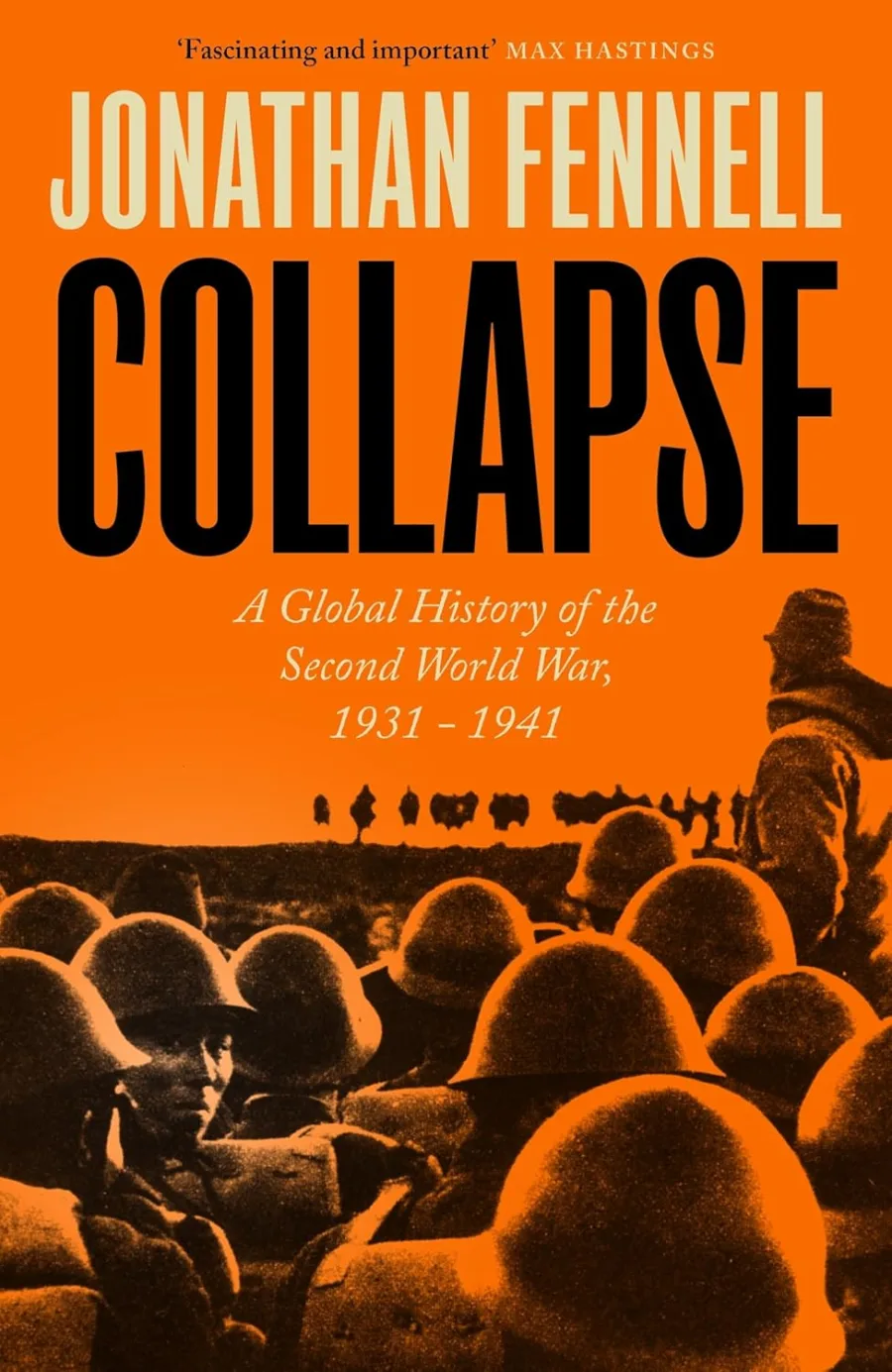
Download Cover Image
Do you want to download the full cover image for Collapse: A Global History of the Second World War, 1931-1941?