
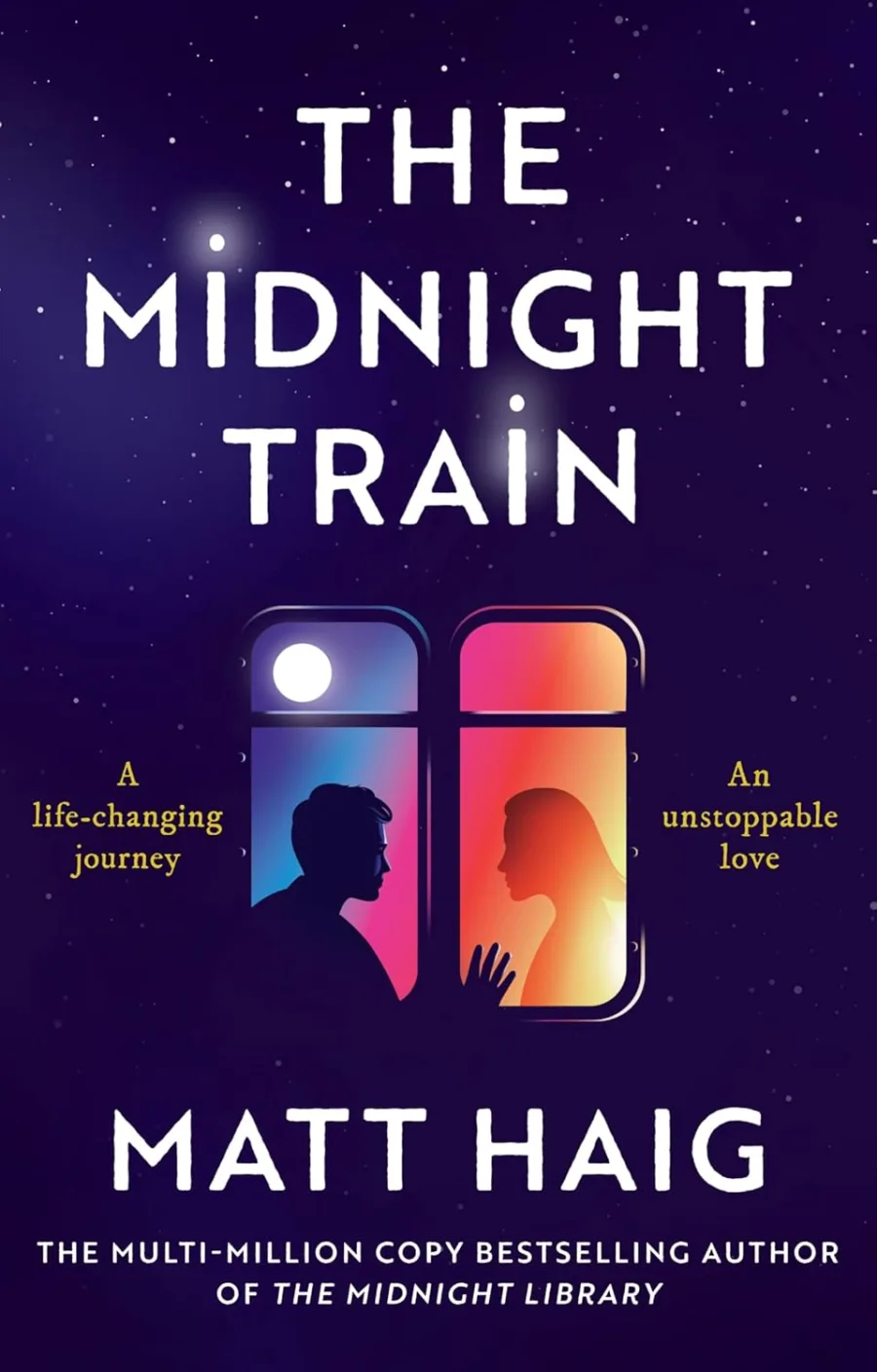
The Midnight Train: A Novel (The Midnight World, 2)
Hardcover
• 304 Pages
• CAD 34.99
• English
• 9781443473484
No ratings yet
| Publisher | HarperCollins Publishers |
|---|---|
| ISBN13 | 9781443473484 |
| ASIN/SKU | 1443473480 |
| Book Format | Hardcover |
| Language | English |
| Pages | 304 |
| List Price | CAD 34.99 |
| Publishing Date | 26/05/2026 |
| Weight | 380 g |
| Book Code | BD00055733 |
Buy this Book
Amazon Stores
Ebook Stores
Other Stores
Discover The Midnight Train: A Novel (The Midnight World, 2) by Matt Haig. This book is published by HarperCollins Publishers in Hardcover format, ISBN 9781443473484, ASIN 1443473480, under Romance, Metaphysical and Visionary Fiction, Time Travel Romance.
Book Description
When your life flashes before your eyes, where would you stop?No one can change the past, but the Midnight Train can take you there.The chance to re-live the moments that meant most.To see what kind of person you really were.For Wilbur his best days were with Maggie, the love of his life. On his honeymoon in Venice.Before he gave it all away.He wishes he could go back and live differently. But to do so risks everything . . .A magical, time-travelling love story, from the world ofThe Midnight Library.When your life flashes before your eyes, where would you stop?
Author Biography
MATT HAIGis the author of the internationally bestselling book,The Midnight Library. He is also the author of the novelsThe Humans,How to Stop Time, andThe Life Impossible, which was a Canadian national bestseller and aNew York Timesbestseller. He has also written a number of children's books, includingA Boy Called Christmas, which became a feature film, and three non-fiction books for adults.
Editorial Reviews
Editorial Reviews will be added soon…
Book Summary
The Midnight Train by Matt Haig is a reflective, emotionally rich novel about regret, love, and the way a life looks when it is viewed backward. It follows Wilbur Budd, an 81-year-old widowed bookshop owner whose outward success hides a deep sense of loneliness and unfinished emotional business. When he dies, he finds himself in a strange afterlife where a magical train takes him back through the most important moments of his life, with a guide named Agnes accompanying him as he revisits the choices, joys, and losses that shaped him.
The novel begins with the feeling that Wilbur’s life has reached its final point, but instead of ending in silence, it opens into memory. On the train, he is taken through scenes from childhood, adulthood, and old age, each one showing him not just what happened, but how his decisions gradually built the life he ended up living. He grows up in a working-class world marked by hardship, family strain, and the early loss of stability, and those experiences help explain why he becomes so determined to create security for himself later in life.
A major part of the story revolves around Maggie, the love of Wilbur’s life. Their relationship is presented as the emotional center of the novel, especially the happiness of their early years and their honeymoon in Venice, which stands out as one of the most vivid and tender parts of his life. Over time, however, ambition, insecurity, and the pressure to succeed pull Wilbur away from the love that once mattered most to him. The tragedy at the heart of the novel is not just that he lost Maggie, but that he helped cause the distance between them himself.
As Wilbur revisits the past, the book explores the painful gap between living a life and truly understanding it. He sees moments that once felt ordinary and realizes how much they mattered. He also begins to understand that success, money, and control cannot protect a person from regret. What seemed at the time like necessary choices now appears more complicated, and the train journey becomes a quiet reckoning with the consequences of self-deception.
The novel also deals with time, fate, and free will. The train allows Wilbur to witness pivotal moments, but it is not meant to let him rewrite them. That rule creates tension, because he becomes more aware of how much he would change if he could. The story asks whether one altered decision could really fix an entire life, or whether regret is part of being human. Rather than turning this into a flashy fantasy, Haig uses the idea to explore memory, responsibility, and the desire for a second chance.
There is also a strong undercurrent of grief running through the book. Wilbur is grieving Maggie, but he is also grieving the younger man he once was and the future he imagined but never fully reached. The train ride forces him to sit with these losses instead of escaping them. At the same time, the novel is not only sad. Agnes and the structure of the journey introduce compassion, patience, and the possibility of forgiveness. The past cannot be changed, but it can be understood differently, and that understanding becomes a kind of peace.
Matt Haig’s style gives the story a warm, philosophical tone that makes the emotional material easy to enter, even when the ideas are heavy. The book is short, direct, and accessible, with a mix of fantasy and realism that keeps the focus on feeling rather than complexity. Like much of Haig’s fiction, it treats an ordinary life as something worthy of attention, and it suggests that meaning is often found not in grand achievements but in the quiet, imperfect moments we usually overlook.
In the end, The Midnight Train is about looking back at a life honestly and learning that regret, while painful, can also reveal love. It is a tender reminder that people often recognize what mattered most only too late, and that the deepest form of wisdom may be the willingness to face one’s own past without denial.
The novel begins with the feeling that Wilbur’s life has reached its final point, but instead of ending in silence, it opens into memory. On the train, he is taken through scenes from childhood, adulthood, and old age, each one showing him not just what happened, but how his decisions gradually built the life he ended up living. He grows up in a working-class world marked by hardship, family strain, and the early loss of stability, and those experiences help explain why he becomes so determined to create security for himself later in life.
A major part of the story revolves around Maggie, the love of Wilbur’s life. Their relationship is presented as the emotional center of the novel, especially the happiness of their early years and their honeymoon in Venice, which stands out as one of the most vivid and tender parts of his life. Over time, however, ambition, insecurity, and the pressure to succeed pull Wilbur away from the love that once mattered most to him. The tragedy at the heart of the novel is not just that he lost Maggie, but that he helped cause the distance between them himself.
As Wilbur revisits the past, the book explores the painful gap between living a life and truly understanding it. He sees moments that once felt ordinary and realizes how much they mattered. He also begins to understand that success, money, and control cannot protect a person from regret. What seemed at the time like necessary choices now appears more complicated, and the train journey becomes a quiet reckoning with the consequences of self-deception.
The novel also deals with time, fate, and free will. The train allows Wilbur to witness pivotal moments, but it is not meant to let him rewrite them. That rule creates tension, because he becomes more aware of how much he would change if he could. The story asks whether one altered decision could really fix an entire life, or whether regret is part of being human. Rather than turning this into a flashy fantasy, Haig uses the idea to explore memory, responsibility, and the desire for a second chance.
There is also a strong undercurrent of grief running through the book. Wilbur is grieving Maggie, but he is also grieving the younger man he once was and the future he imagined but never fully reached. The train ride forces him to sit with these losses instead of escaping them. At the same time, the novel is not only sad. Agnes and the structure of the journey introduce compassion, patience, and the possibility of forgiveness. The past cannot be changed, but it can be understood differently, and that understanding becomes a kind of peace.
Matt Haig’s style gives the story a warm, philosophical tone that makes the emotional material easy to enter, even when the ideas are heavy. The book is short, direct, and accessible, with a mix of fantasy and realism that keeps the focus on feeling rather than complexity. Like much of Haig’s fiction, it treats an ordinary life as something worthy of attention, and it suggests that meaning is often found not in grand achievements but in the quiet, imperfect moments we usually overlook.
In the end, The Midnight Train is about looking back at a life honestly and learning that regret, while painful, can also reveal love. It is a tender reminder that people often recognize what mattered most only too late, and that the deepest form of wisdom may be the willingness to face one’s own past without denial.
Sample Chapters
Sample Chapters will be added soon…
Reader Reviews
No reviews yet.
The Midnight Train: A Novel (The Midnight World, 2)
Download Cover Image
Do you want to download the full cover image for The Midnight Train: A Novel (The Midnight World, 2)?