
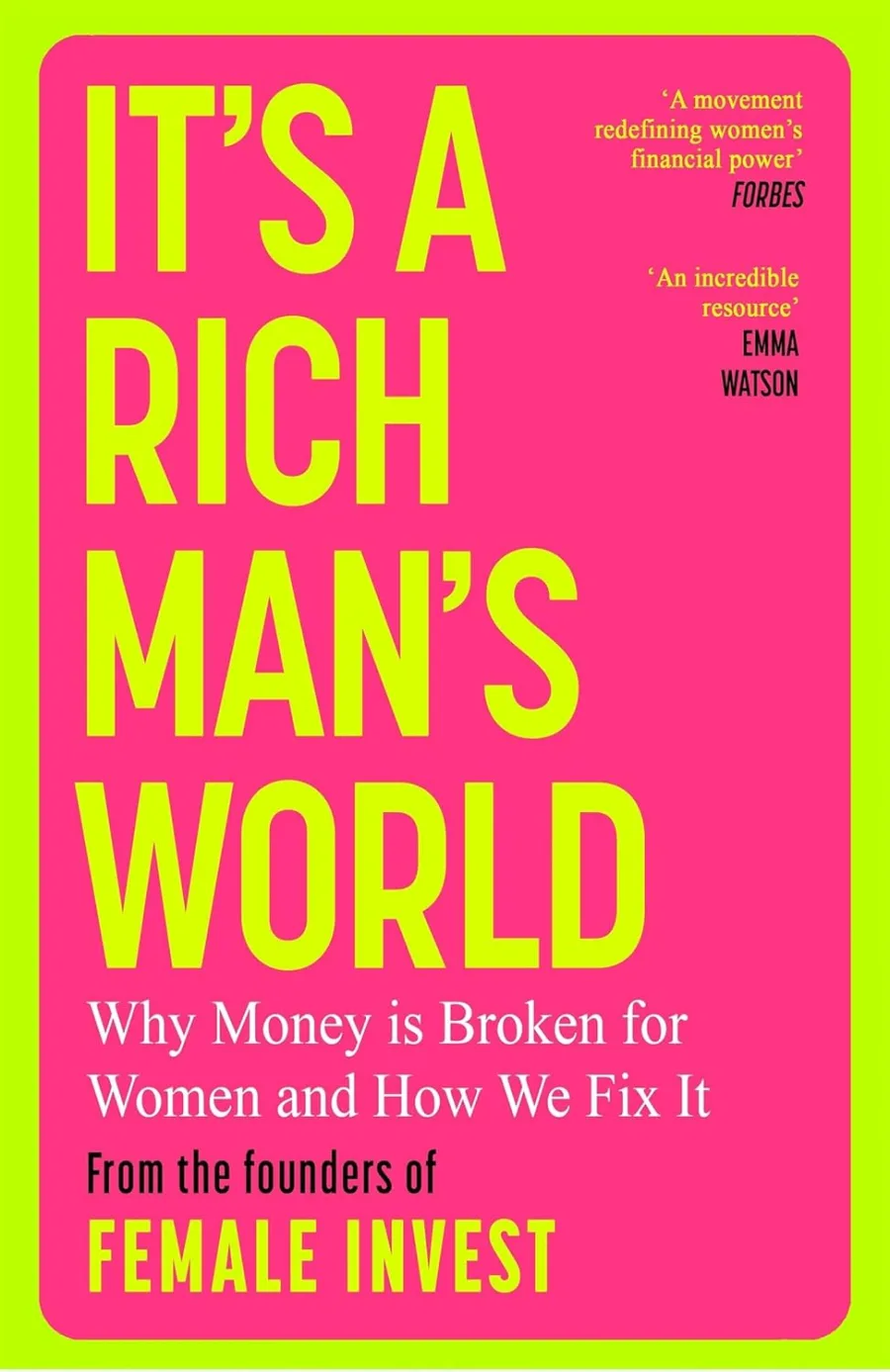
It's a Rich Man's World: Why Money is Broken and How We Fix It, from the founders of Female Invest
Camilla Falkenberg, Emma Due Bitz
Hardcover
• 240 Pages
• GBP 20.00
• English
• 9781398725645
No ratings yet
| Publisher | Orion Ignite |
|---|---|
| ISBN13 | 9781398725645 |
| ASIN/SKU | 1398725641 |
| Book Format | Hardcover |
| Language | English |
| Pages | 240 |
| List Price | GBP 20.00 |
| Publishing Date | 09/07/2026 |
| Dimensions | 15.4 x 2.6 x 23.8 cm |
| Weight | 430 g |
| Book Code | BD00055690 |
Buy this Book
Amazon Stores
Ebook Stores
Other Stores
Discover It's a Rich Man's World: Why Money is Broken and How We Fix It, from the founders of Female Invest by Camilla Falkenberg. This book is published by Orion Ignite in Hardcover format, ISBN 9781398725645, ASIN 1398725641, under Business and Money, Personal Money Management, Business Life.
Book Description
We're Female Invest and we've educated more than a million women on investing. Along the way, we realised something: MONEY IS BROKEN FOR WOMEN.
Because women's financial lives are not shaped by salary, saving and investing. They are shaped by the structures around us: by the systems we grow up in, by expectations, policies, and life events that affect women differently than men. We saw that there are eight major life themes that shape a woman's financial future. And how you navigate those has a bigger impact than any job title, salary negotiation or investment strategy ever will.
Instead of writing another investing book, we wrote one that explains why money works differently for women and most importantly, how you can navigate it.
It's a Rich Man's World is a book rooted in data, but we also share deeply personal stories from our own lives, in the hope that you'll recognise elements of your own journey in it.
You'll discover:
* The 8 life events that determine your financial future: Most women don't recognize the financial impact until it's too late.
* How to navigate them successfully: Clear, practical guidance to spot and avoid the most common financial traps women face.
* Personal stories: We share deeply personal, vulnerable stories from our own life, to help you see the impact behind the data.
No matter where you're from or where in life you are, it's never too late to change your financial future.
**
"A movement redefining women's financial power" FORBES
"The best source of financial knowledge out there" EMMA WATSON
Because women's financial lives are not shaped by salary, saving and investing. They are shaped by the structures around us: by the systems we grow up in, by expectations, policies, and life events that affect women differently than men. We saw that there are eight major life themes that shape a woman's financial future. And how you navigate those has a bigger impact than any job title, salary negotiation or investment strategy ever will.
Instead of writing another investing book, we wrote one that explains why money works differently for women and most importantly, how you can navigate it.
It's a Rich Man's World is a book rooted in data, but we also share deeply personal stories from our own lives, in the hope that you'll recognise elements of your own journey in it.
You'll discover:
* The 8 life events that determine your financial future: Most women don't recognize the financial impact until it's too late.
* How to navigate them successfully: Clear, practical guidance to spot and avoid the most common financial traps women face.
* Personal stories: We share deeply personal, vulnerable stories from our own life, to help you see the impact behind the data.
No matter where you're from or where in life you are, it's never too late to change your financial future.
**
"A movement redefining women's financial power" FORBES
"The best source of financial knowledge out there" EMMA WATSON
Author Biography
Camilla Falkenberg, Emma Due Bitz, and Anna-Sophie Hartvigsen are the Founders of Female Invest, a global financial educator targeting women. Through their subscription business, which has members in 120+ countries, they educate women on personal finance and investing with a mission to close the financial gender gap. More than 100,000 women have taken their courses, and they are listed on the Forbes 30 under 30 list within finance, having raised over $23 million in a world where women (sadly) raise less than 2% of funding. They have also won the worlds' largest startup competition and authored the international bestseller Girls Just Wanna Have Funds. They have found global fame with their work, featuring in Vogue, Elle, Harper's Bazaar and many others.
Editorial Reviews
Editorial Reviews will be added soon…
Book Summary
It's a Rich Man's World: Why Money Is Broken for Women and How We Fix It by Camilla Falkenberg, Emma Due Bitz, and Anna-Sophie Hartvigsen is much more than a personal finance guide. Written by the founders of Female Invest, the book examines why women often face greater financial challenges than men, not because they make poorer financial decisions, but because they operate within systems that were largely designed without their realities in mind. Drawing on research, economic data, and deeply personal stories, the authors argue that financial inequality is not simply an individual problem—it is a structural one. At the same time, they offer practical ways for women to build wealth despite these barriers. The book is organized around eight major life events that shape a woman's financial future, showing that life choices often have a far greater impact on wealth than investment strategies alone.
The authors begin by challenging one of the most common myths about money—that financial success depends entirely on hard work, discipline, and smart investing. While these qualities certainly matter, they explain that they do not tell the whole story. Men and women often begin their financial journeys under very different circumstances. Social expectations, workplace discrimination, caregiving responsibilities, healthcare needs, and public policies all influence how wealth is earned, saved, and accumulated. Ignoring these realities, they argue, leads to advice that works well for some people but fails many women.
One of the book's central messages is that financial education should start with understanding the system before trying to master it. Rather than blaming women for investing too little or saving too slowly, the authors encourage readers to ask why these patterns exist. They explain that women are frequently encouraged to be careful with money but are less often encouraged to build wealth. Society teaches many women to avoid financial risk while expecting men to pursue financial opportunities. Over time, these cultural messages create significant differences in confidence, investment behaviour, and long-term financial outcomes.
The book then explores the eight major life stages and events that most strongly influence women's finances. Although every woman's experience is unique, the authors show that many follow similar patterns. Education, entering the workforce, salary negotiations, career development, relationships, motherhood, caregiving responsibilities, divorce, menopause, retirement, and longer life expectancy all create financial consequences that are often overlooked until much later. Instead of viewing these events as isolated experiences, the book presents them as connected stages that shape a lifetime of financial security.
One particularly insightful discussion focuses on career development. The authors explain that women often hesitate to negotiate salaries, ask for promotions, or pursue higher-paying opportunities—not because they lack ambition, but because they have been socialized differently or fear negative reactions. Since salary increases compound over decades, even small differences early in a career can result in significantly lower lifetime earnings. The book encourages readers to prepare thoroughly for negotiations, understand their market value, and view earning more not as selfishness but as an important step toward long-term independence.
Motherhood receives special attention because it represents one of the largest financial turning points in many women's lives. Pregnancy, childcare responsibilities, career breaks, and reduced working hours frequently lead to lower income and slower wealth accumulation. The authors do not criticize women for choosing motherhood; instead, they argue that societies often fail to recognize or compensate the enormous economic value of unpaid caregiving. They encourage families to discuss finances openly, divide responsibilities fairly, and consider the long-term financial effects of every major family decision before it is made.
Relationships also play a significant role in financial wellbeing. Whether entering a marriage, living with a partner, or sharing household expenses, financial conversations are often avoided because they feel uncomfortable. The authors stress that openness about money is essential for healthy relationships. Partners should understand each other's assets, debts, savings, investments, and long-term goals. Love and trust are important, they argue, but financial transparency is equally necessary because unexpected events such as separation, illness, or death can dramatically alter someone's financial future.
The book also examines divorce and relationship breakdowns, subjects that many financial books barely discuss. While emotionally painful, these situations often have lasting financial consequences, especially for women who may have sacrificed career advancement to care for children or support a partner's ambitions. The authors advise maintaining financial independence throughout a relationship by understanding household finances, preserving personal savings where appropriate, and continuing to develop professional skills even during periods devoted to caregiving.
Another important theme is investing. Unlike many investing guides that focus primarily on technical concepts, It's a Rich Man's World first addresses the emotional barriers preventing many women from entering financial markets. Fear of making mistakes, believing investing is only for experts, or assuming small amounts are not worth investing often discourage participation. The authors explain that investing is not gambling but a long-term process of allowing money to grow steadily over time. By beginning early, investing consistently, and remaining patient, individuals can benefit from compound growth regardless of their starting income.
The discussion extends beyond individual behaviour to broader social inequality. Using international research and statistics, the authors demonstrate that women worldwide generally own less wealth, receive lower retirement incomes, perform a disproportionate share of unpaid labour, and live longer than men, requiring greater retirement savings. These patterns are not presented to discourage readers but to illustrate why financial education designed specifically for women's experiences is urgently needed.
What makes the book especially engaging is its balance between evidence and personal storytelling. The three authors openly share moments from their own lives, including financial mistakes, career uncertainties, entrepreneurial challenges, and lessons learned while building Female Invest. These stories transform abstract economic concepts into relatable experiences, helping readers recognize similar patterns in their own lives. Rather than presenting themselves as flawless financial experts, the authors write with honesty and vulnerability, making the advice feel practical rather than intimidating.
Throughout the book, the tone remains hopeful. Although the authors acknowledge that systemic inequality still exists, they repeatedly emphasize that understanding these structures gives individuals greater power to navigate them successfully. Financial independence is presented not merely as accumulating wealth but as gaining freedom, confidence, and the ability to make life choices without constant financial fear. Education becomes the foundation upon which lasting financial security is built.
Ultimately, It's a Rich Man's World argues that money should not be viewed simply as mathematics or investment strategy. It is deeply connected to culture, family, work, relationships, and public policy. By helping readers understand how these forces shape financial outcomes, the book empowers women to make informed decisions, avoid common financial traps, and build lasting wealth on their own terms. Its blend of rigorous research, practical guidance, and compassionate storytelling makes it an insightful and highly relevant guide for anyone seeking to understand the intersection of gender and personal finance.
The authors begin by challenging one of the most common myths about money—that financial success depends entirely on hard work, discipline, and smart investing. While these qualities certainly matter, they explain that they do not tell the whole story. Men and women often begin their financial journeys under very different circumstances. Social expectations, workplace discrimination, caregiving responsibilities, healthcare needs, and public policies all influence how wealth is earned, saved, and accumulated. Ignoring these realities, they argue, leads to advice that works well for some people but fails many women.
One of the book's central messages is that financial education should start with understanding the system before trying to master it. Rather than blaming women for investing too little or saving too slowly, the authors encourage readers to ask why these patterns exist. They explain that women are frequently encouraged to be careful with money but are less often encouraged to build wealth. Society teaches many women to avoid financial risk while expecting men to pursue financial opportunities. Over time, these cultural messages create significant differences in confidence, investment behaviour, and long-term financial outcomes.
The book then explores the eight major life stages and events that most strongly influence women's finances. Although every woman's experience is unique, the authors show that many follow similar patterns. Education, entering the workforce, salary negotiations, career development, relationships, motherhood, caregiving responsibilities, divorce, menopause, retirement, and longer life expectancy all create financial consequences that are often overlooked until much later. Instead of viewing these events as isolated experiences, the book presents them as connected stages that shape a lifetime of financial security.
One particularly insightful discussion focuses on career development. The authors explain that women often hesitate to negotiate salaries, ask for promotions, or pursue higher-paying opportunities—not because they lack ambition, but because they have been socialized differently or fear negative reactions. Since salary increases compound over decades, even small differences early in a career can result in significantly lower lifetime earnings. The book encourages readers to prepare thoroughly for negotiations, understand their market value, and view earning more not as selfishness but as an important step toward long-term independence.
Motherhood receives special attention because it represents one of the largest financial turning points in many women's lives. Pregnancy, childcare responsibilities, career breaks, and reduced working hours frequently lead to lower income and slower wealth accumulation. The authors do not criticize women for choosing motherhood; instead, they argue that societies often fail to recognize or compensate the enormous economic value of unpaid caregiving. They encourage families to discuss finances openly, divide responsibilities fairly, and consider the long-term financial effects of every major family decision before it is made.
Relationships also play a significant role in financial wellbeing. Whether entering a marriage, living with a partner, or sharing household expenses, financial conversations are often avoided because they feel uncomfortable. The authors stress that openness about money is essential for healthy relationships. Partners should understand each other's assets, debts, savings, investments, and long-term goals. Love and trust are important, they argue, but financial transparency is equally necessary because unexpected events such as separation, illness, or death can dramatically alter someone's financial future.
The book also examines divorce and relationship breakdowns, subjects that many financial books barely discuss. While emotionally painful, these situations often have lasting financial consequences, especially for women who may have sacrificed career advancement to care for children or support a partner's ambitions. The authors advise maintaining financial independence throughout a relationship by understanding household finances, preserving personal savings where appropriate, and continuing to develop professional skills even during periods devoted to caregiving.
Another important theme is investing. Unlike many investing guides that focus primarily on technical concepts, It's a Rich Man's World first addresses the emotional barriers preventing many women from entering financial markets. Fear of making mistakes, believing investing is only for experts, or assuming small amounts are not worth investing often discourage participation. The authors explain that investing is not gambling but a long-term process of allowing money to grow steadily over time. By beginning early, investing consistently, and remaining patient, individuals can benefit from compound growth regardless of their starting income.
The discussion extends beyond individual behaviour to broader social inequality. Using international research and statistics, the authors demonstrate that women worldwide generally own less wealth, receive lower retirement incomes, perform a disproportionate share of unpaid labour, and live longer than men, requiring greater retirement savings. These patterns are not presented to discourage readers but to illustrate why financial education designed specifically for women's experiences is urgently needed.
What makes the book especially engaging is its balance between evidence and personal storytelling. The three authors openly share moments from their own lives, including financial mistakes, career uncertainties, entrepreneurial challenges, and lessons learned while building Female Invest. These stories transform abstract economic concepts into relatable experiences, helping readers recognize similar patterns in their own lives. Rather than presenting themselves as flawless financial experts, the authors write with honesty and vulnerability, making the advice feel practical rather than intimidating.
Throughout the book, the tone remains hopeful. Although the authors acknowledge that systemic inequality still exists, they repeatedly emphasize that understanding these structures gives individuals greater power to navigate them successfully. Financial independence is presented not merely as accumulating wealth but as gaining freedom, confidence, and the ability to make life choices without constant financial fear. Education becomes the foundation upon which lasting financial security is built.
Ultimately, It's a Rich Man's World argues that money should not be viewed simply as mathematics or investment strategy. It is deeply connected to culture, family, work, relationships, and public policy. By helping readers understand how these forces shape financial outcomes, the book empowers women to make informed decisions, avoid common financial traps, and build lasting wealth on their own terms. Its blend of rigorous research, practical guidance, and compassionate storytelling makes it an insightful and highly relevant guide for anyone seeking to understand the intersection of gender and personal finance.
Sample Chapters
Sample Chapters will be added soon…
Reader Reviews
No reviews yet.
It's a Rich Man's World: Why Money is Broken and How We Fix It, from the founders of Female Invest
Download Cover Image
Do you want to download the full cover image for It's a Rich Man's World: Why Money is Broken and How We Fix It, from the founders of Female Invest?