
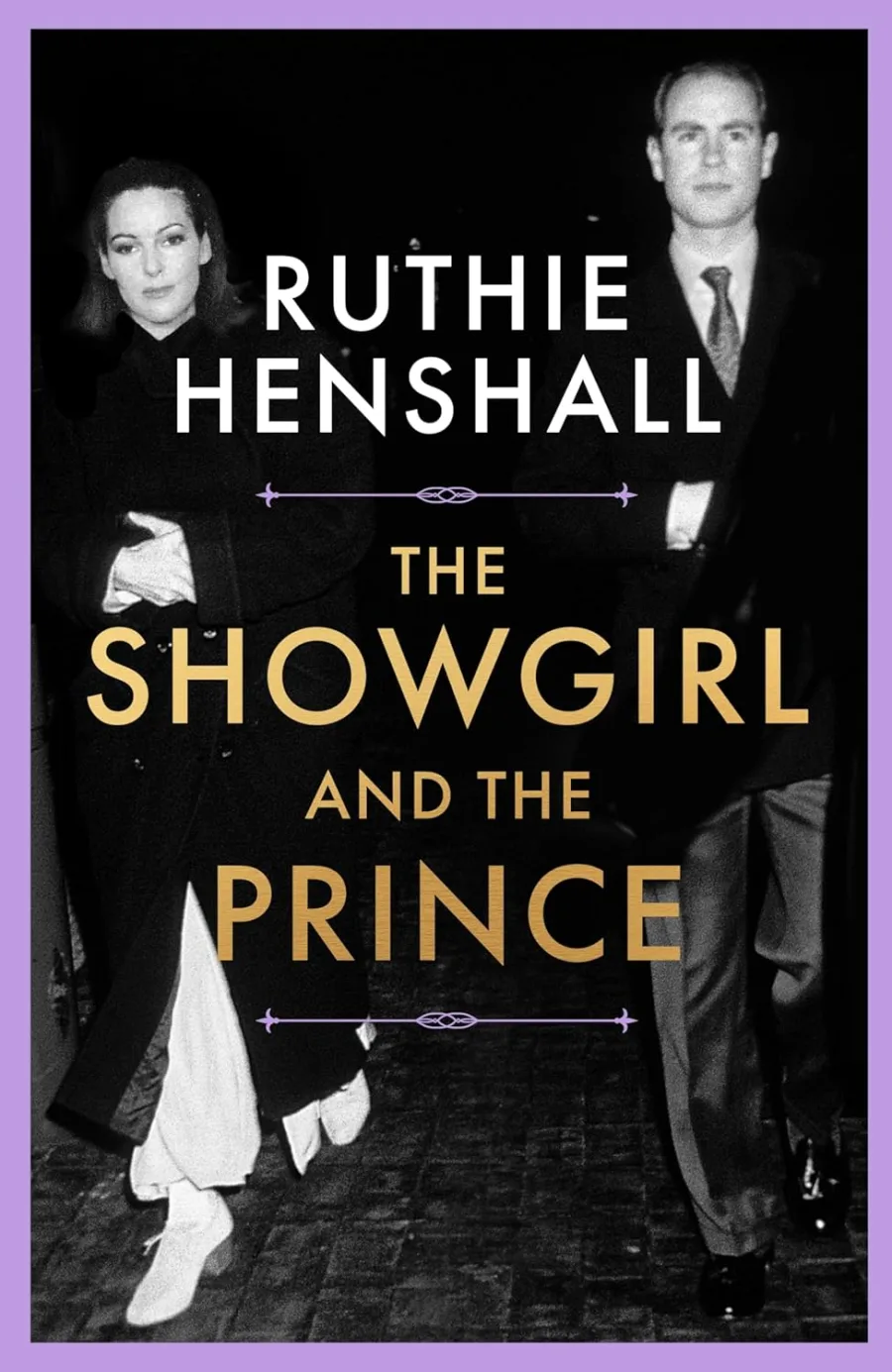
The Showgirl and the Prince
Hardcover
• 352 Pages
• GBP 22.00
• English
• 9781035097685
No ratings yet
| Publisher | Macmillan |
|---|---|
| ISBN13 | 9781035097685 |
| ASIN/SKU | 1035097680 |
| Book Format | Hardcover |
| Language | English |
| Pages | 352 |
| List Price | GBP 22.00 |
| Publishing Date | 16/07/2026 |
| Dimensions | 16.4 x 3.3 x 24.5 cm |
| Weight | 590 g |
| Book Code | BD00055680 |
Buy this Book
Amazon Stores
Ebook Stores
Other Stores
Discover The Showgirl and the Prince by Ruthie Henshall. This book is published by Macmillan in Hardcover format, ISBN 9781035097685, ASIN 1035097680, under Biographies and Memoirs, Stage Actor Biographies, Acting and Auditioning.
Book Description
From much-loved West End and Broadway star Ruthie Henshall, The Showgirl and the Prince is a funny, honest and touching real-life Cinderella story – if Cinders is a lycra-clad chorus girl from Bromley who drinks and smokes too much.
In 1988, Ruthie was at the start of her career, a chorus girl in Cats (third feline from the left). That was when she met Prince Edward, who was working for Andrew Lloyd Webber at the time. Edward is kind and thoughtful; Ruthie is warm, flirty and prone to telling risqué jokes. She’s not like anyone he’s dated before . . .
In this charming and poignant memoir, Ruthie describes a seminal period in her life, navigating a secret relationship with Prince Edward while determinedly following her dream of landing a leading West End role. She shares hilarious backstage stories from some of the era’s biggest musicals – including Miss Saigon, Les Misérables and Crazy for You – rocks up to Buckingham Palace in dungarees over a leotard (the height of 80s fashion), has tea at Windsor with the Queen and charms Prince Philip at Balmoral. But as she swaps her hotpants for Laura Ashley frocks and tries to be good, she wonders can she have her happy ever after?
Packed with parties, gossip and glamour, The Showgirl and the Prince will transport you back to 1980s and 1990s London, recreating a golden era of musical theatre and the bittersweet joy of first love.
In 1988, Ruthie was at the start of her career, a chorus girl in Cats (third feline from the left). That was when she met Prince Edward, who was working for Andrew Lloyd Webber at the time. Edward is kind and thoughtful; Ruthie is warm, flirty and prone to telling risqué jokes. She’s not like anyone he’s dated before . . .
In this charming and poignant memoir, Ruthie describes a seminal period in her life, navigating a secret relationship with Prince Edward while determinedly following her dream of landing a leading West End role. She shares hilarious backstage stories from some of the era’s biggest musicals – including Miss Saigon, Les Misérables and Crazy for You – rocks up to Buckingham Palace in dungarees over a leotard (the height of 80s fashion), has tea at Windsor with the Queen and charms Prince Philip at Balmoral. But as she swaps her hotpants for Laura Ashley frocks and tries to be good, she wonders can she have her happy ever after?
Packed with parties, gossip and glamour, The Showgirl and the Prince will transport you back to 1980s and 1990s London, recreating a golden era of musical theatre and the bittersweet joy of first love.
Author Biography
Ruthie Henshall’s multi-award winning career has seen her star in the most popular musicals of the past thirty years, including Cats, Miss Saigon, Crazy For You, She Loves Me, Marguerite, Oliver!, A Chorus Line, Les Misérables, Billy Elliot, Chicago and Cabaret. She has also enjoyed tremendous success in plays, concerts and on television. In addition to her iconic runs as both Roxie and Velma in the West End and Broadway productions of Chicago, Ruthie played Mama Morton in the West End, making her the only British actress to have played all three leading female roles in the show. The Showgirl and the Prince is her deeply personal and touching memoir.
Editorial Reviews
Editorial Reviews will be added soon…
Book Summary
The Showgirl and the Prince by Ruthie Henshall is a candid, funny, affectionate, and ultimately bittersweet memoir about ambition, first love, fame, and the difficult choices that shape a life. Henshall, an award-winning West End and Broadway performer, looks back at a remarkable period in her twenties, when she was beginning her theatrical career and unexpectedly entered a relationship with Prince Edward. The memoir moves between the glittering world of musical theatre and the highly controlled world of the British royal family, creating a personal story that feels both extraordinary and deeply human.
The story begins in the late 1980s, when Henshall was still a young performer trying to establish herself. In 1987–88, she was working as a chorus girl in Cats, far from the leading roles that she dreamed of playing. She was ambitious, energetic, outspoken, and determined to build a career through talent and hard work. Her life was centered on rehearsals, performances, auditions, friendships, parties, and the unpredictable rhythm of theatrical life. She was not a princess waiting to be discovered; she was a young woman trying to make her own way in a demanding profession.
Then she met Prince Edward, who was working for Andrew Lloyd Webber's Really Useful Theatre Company at the time. Henshall was twenty and Edward was twenty-three. Their personalities were strikingly different but complementary. Edward comes across in Henshall's recollections as quiet, thoughtful, gentle, and cautious, while she describes herself as lively, flirtatious, humorous, and unafraid to say what she thought. Their attraction developed gradually, and what began as an unexpected connection became a discreet relationship that lasted for around five years.
The secrecy surrounding their romance becomes one of the memoir's defining elements. Edward's position meant that an ordinary relationship could never remain entirely ordinary. There was the constant possibility of press attention, public speculation, and royal scrutiny. As a result, Henshall found herself living between two very different worlds. In one, she was a young actress trying to prove herself on the West End stage. In the other, she was entering palaces, meeting members of the Royal Family, and learning the strange rules and rituals that accompanied Edward's position.
Henshall writes about these experiences with considerable humor. Her descriptions of visiting Buckingham Palace and Windsor are deliberately down-to-earth rather than reverential. At one point, she turns up at the palace in dungarees over a leotard, an outfit that captures both the fashion of the 1980s and her refusal to pretend to be someone she was not. She also recalls tea with Queen Elizabeth II and encounters with Prince Philip, as well as visits to Balmoral. These episodes provide an amusing contrast between the glamorous image of royalty and the much more informal human beings she encountered behind closed doors.
Yet beneath the humor is a serious question: Could Ruthie Henshall actually become part of the royal world without losing herself?
This question becomes increasingly important as her theatrical career develops. Henshall is not content simply to be Prince Edward's girlfriend. She wants to become a leading actress. Her professional ambitions eventually bring her major opportunities, including work associated with productions such as Miss Saigon, Les Misérables, and Crazy for You. The memoir therefore follows two forms of ascent at the same time: Edward's movement toward his eventual responsibilities as a member of the Royal Family and Henshall's rise from chorus performer toward stardom.
The conflict between those two paths is at the emotional center of the book. Being with Edward might have offered Henshall a fairy-tale future, but becoming a royal partner would have required enormous compromises. Her career involved performing eight shows a week, rehearsing intensely, auditioning, traveling, and constantly pursuing the next opportunity. Royal life demanded something very different: public duty, appearances, restrictions, scrutiny, and an acceptance that personal choices could affect the institution around her.
Henshall gradually recognizes that choosing Edward could mean choosing between love and the career that had become central to her identity. Edward himself understood the problem. According to Henshall's recollection, he once explained that in an ideal world he would have two wives—one for the royal job and another for the woman he loved—because he would not want the woman he loved to endure the demands of royal life. The remark is both humorous and heartbreaking because it reveals how deeply he understood the conflict between private happiness and public duty.
The memoir also becomes more personal as Henshall reflects on experiences that existed beneath her confident public personality. She writes about childhood trauma and the emotional difficulties she carried into adulthood. Her relationship with Edward mattered partly because she experienced him as someone who made her feel safe and cared for. This gives their romance greater emotional depth: it was not simply an exciting encounter with royalty but a relationship in which Henshall felt genuinely understood.
At the same time, the book does not turn Edward into either a perfect prince or a villain. Henshall's portrayal is affectionate and nuanced. She makes clear that she loved him, while also acknowledging that love could not solve the fundamental incompatibility between their lives. Their relationship ultimately ended in 1993. Edward later married Sophie Rhys-Jones, while Henshall continued pursuing her theatrical career.
What makes the memoir especially engaging is that the royal romance is only part of its story. Henshall is also documenting the transformation of a young performer into an accomplished actress. The backstage anecdotes from musical theatre provide a vivid picture of the era: the rehearsals, friendships, parties, auditions, gossip, exhaustion, excitement, and sheer competitiveness involved in building a career on the stage. Her memories of Miss Saigon, Les Misérables, Crazy for You, and other productions show that her real Cinderella story was ultimately not about marrying a prince. It was about becoming the woman she wanted to be.
That realization gives the book its deepest emotional significance. The title suggests a fairy tale, but Henshall gradually turns the idea of a fairy tale inside out. The prince is real, the palaces are real, and the romance is real—but the "happily ever after" is not what readers might expect. Henshall discovers that happiness sometimes requires refusing the life that looks most glamorous from the outside.
Ultimately, The Showgirl and the Prince is a memoir about choosing identity over fantasy without denying the reality of love. Henshall looks back with affection rather than bitterness. She remembers a relationship that mattered deeply, a remarkable encounter with royal life, and a formative period in her career. But she also recognizes that the greatest achievement was remaining true to herself.
The result is a warm and entertaining portrait of 1980s and 1990s London, musical theatre, romance, and royalty, but also a thoughtful meditation on ambition and sacrifice. Henshall's story suggests that growing up sometimes means realizing that the life you once imagined is not necessarily the life that will make you happy. A prince may enter your story, but you still have to decide who you want to become.
The story begins in the late 1980s, when Henshall was still a young performer trying to establish herself. In 1987–88, she was working as a chorus girl in Cats, far from the leading roles that she dreamed of playing. She was ambitious, energetic, outspoken, and determined to build a career through talent and hard work. Her life was centered on rehearsals, performances, auditions, friendships, parties, and the unpredictable rhythm of theatrical life. She was not a princess waiting to be discovered; she was a young woman trying to make her own way in a demanding profession.
Then she met Prince Edward, who was working for Andrew Lloyd Webber's Really Useful Theatre Company at the time. Henshall was twenty and Edward was twenty-three. Their personalities were strikingly different but complementary. Edward comes across in Henshall's recollections as quiet, thoughtful, gentle, and cautious, while she describes herself as lively, flirtatious, humorous, and unafraid to say what she thought. Their attraction developed gradually, and what began as an unexpected connection became a discreet relationship that lasted for around five years.
The secrecy surrounding their romance becomes one of the memoir's defining elements. Edward's position meant that an ordinary relationship could never remain entirely ordinary. There was the constant possibility of press attention, public speculation, and royal scrutiny. As a result, Henshall found herself living between two very different worlds. In one, she was a young actress trying to prove herself on the West End stage. In the other, she was entering palaces, meeting members of the Royal Family, and learning the strange rules and rituals that accompanied Edward's position.
Henshall writes about these experiences with considerable humor. Her descriptions of visiting Buckingham Palace and Windsor are deliberately down-to-earth rather than reverential. At one point, she turns up at the palace in dungarees over a leotard, an outfit that captures both the fashion of the 1980s and her refusal to pretend to be someone she was not. She also recalls tea with Queen Elizabeth II and encounters with Prince Philip, as well as visits to Balmoral. These episodes provide an amusing contrast between the glamorous image of royalty and the much more informal human beings she encountered behind closed doors.
Yet beneath the humor is a serious question: Could Ruthie Henshall actually become part of the royal world without losing herself?
This question becomes increasingly important as her theatrical career develops. Henshall is not content simply to be Prince Edward's girlfriend. She wants to become a leading actress. Her professional ambitions eventually bring her major opportunities, including work associated with productions such as Miss Saigon, Les Misérables, and Crazy for You. The memoir therefore follows two forms of ascent at the same time: Edward's movement toward his eventual responsibilities as a member of the Royal Family and Henshall's rise from chorus performer toward stardom.
The conflict between those two paths is at the emotional center of the book. Being with Edward might have offered Henshall a fairy-tale future, but becoming a royal partner would have required enormous compromises. Her career involved performing eight shows a week, rehearsing intensely, auditioning, traveling, and constantly pursuing the next opportunity. Royal life demanded something very different: public duty, appearances, restrictions, scrutiny, and an acceptance that personal choices could affect the institution around her.
Henshall gradually recognizes that choosing Edward could mean choosing between love and the career that had become central to her identity. Edward himself understood the problem. According to Henshall's recollection, he once explained that in an ideal world he would have two wives—one for the royal job and another for the woman he loved—because he would not want the woman he loved to endure the demands of royal life. The remark is both humorous and heartbreaking because it reveals how deeply he understood the conflict between private happiness and public duty.
The memoir also becomes more personal as Henshall reflects on experiences that existed beneath her confident public personality. She writes about childhood trauma and the emotional difficulties she carried into adulthood. Her relationship with Edward mattered partly because she experienced him as someone who made her feel safe and cared for. This gives their romance greater emotional depth: it was not simply an exciting encounter with royalty but a relationship in which Henshall felt genuinely understood.
At the same time, the book does not turn Edward into either a perfect prince or a villain. Henshall's portrayal is affectionate and nuanced. She makes clear that she loved him, while also acknowledging that love could not solve the fundamental incompatibility between their lives. Their relationship ultimately ended in 1993. Edward later married Sophie Rhys-Jones, while Henshall continued pursuing her theatrical career.
What makes the memoir especially engaging is that the royal romance is only part of its story. Henshall is also documenting the transformation of a young performer into an accomplished actress. The backstage anecdotes from musical theatre provide a vivid picture of the era: the rehearsals, friendships, parties, auditions, gossip, exhaustion, excitement, and sheer competitiveness involved in building a career on the stage. Her memories of Miss Saigon, Les Misérables, Crazy for You, and other productions show that her real Cinderella story was ultimately not about marrying a prince. It was about becoming the woman she wanted to be.
That realization gives the book its deepest emotional significance. The title suggests a fairy tale, but Henshall gradually turns the idea of a fairy tale inside out. The prince is real, the palaces are real, and the romance is real—but the "happily ever after" is not what readers might expect. Henshall discovers that happiness sometimes requires refusing the life that looks most glamorous from the outside.
Ultimately, The Showgirl and the Prince is a memoir about choosing identity over fantasy without denying the reality of love. Henshall looks back with affection rather than bitterness. She remembers a relationship that mattered deeply, a remarkable encounter with royal life, and a formative period in her career. But she also recognizes that the greatest achievement was remaining true to herself.
The result is a warm and entertaining portrait of 1980s and 1990s London, musical theatre, romance, and royalty, but also a thoughtful meditation on ambition and sacrifice. Henshall's story suggests that growing up sometimes means realizing that the life you once imagined is not necessarily the life that will make you happy. A prince may enter your story, but you still have to decide who you want to become.
Sample Chapters
Sample Chapters will be added soon…
Reader Reviews
No reviews yet.
The Showgirl and the Prince
Download Cover Image
Do you want to download the full cover image for The Showgirl and the Prince?