
Reasonable Doubt: Examining the Case of Lucy Letby
Paperback
• 461 Pages
• GBP 12.99
• English
• 9781917447492
No ratings yet
| Publisher | Cinto Press |
|---|---|
| ISBN13 | 9781917447492 |
| ASIN/SKU | 1917447493 |
| Book Format | Paperback |
| Language | English |
| Pages | 461 |
| List Price | GBP 12.99 |
| Publishing Date | 09/07/2026 |
| Dimensions | 12.9 x 2.77 x 19.81 cm |
| Weight | 397 g |
| Book Code | BD00055672 |
Buy this Book
Amazon Stores
Ebook Stores
Other Stores
Discover Reasonable Doubt: Examining the Case of Lucy Letby by Christopher Morris. This book is published by Cinto Press in Paperback format, ISBN 9781917447492, ASIN 1917447493, under Mystery, Thriller and Suspense, Serial Killers, Law.
Book Description
Christopher Morris believes Lucy Letby has been the victim of a miscarriage of justice, and that her guilty verdict is not beyond reasonable doubt. He is not the only one.
Author Biography
Christopher Morris is an award-winning writer, who has written dozens of books as an author and ghostwriter across an array of subjects, including several bestsellers. His journalistic writing has also featured in many notable publications, while he has also been interviewed several times for media and TV.
Editorial Reviews
Editorial Reviews will be added soon…
Book Summary
Reasonable Doubt: Examining the Case of Lucy Letby by Christopher Morris is an investigative work that re-examines one of the most controversial criminal cases in modern British history: the conviction of neonatal nurse Lucy Letby for the murders and attempted murders of babies at the Countess of Chester Hospital. Rather than arguing that Letby is definitively innocent, Morris frames the book around a narrower but significant question: Did the prosecution prove guilt beyond reasonable doubt? His conclusion is that serious unanswered questions remain and that the conviction deserves fresh scrutiny. The book presents itself as a detailed examination of the evidence, expert opinions, and legal process that led to Letby's conviction.
The book begins by explaining why the case captured such enormous public attention. Lucy Letby's conviction shocked Britain because she was portrayed as a trusted neonatal nurse who had deliberately harmed the most vulnerable patients imaginable. The prosecution argued that a pattern of unexplained infant deaths and collapses pointed to a single individual working on the ward. The jury ultimately convicted Letby of multiple murders and attempted murders, leading to several whole-life prison sentences. Morris acknowledges the profound suffering experienced by the babies' families while emphasizing that sympathy for victims should not replace careful examination of evidence. He argues that criminal justice requires both compassion and rigorous proof.
A major portion of the book examines the medical evidence presented during the trial. Morris explains that many convictions relied heavily on expert testimony interpreting the causes of the babies' sudden deterioration. He argues that, after the trial, a number of specialists in neonatology, paediatrics, pathology, statistics, and other scientific fields publicly questioned whether some of these medical conclusions were sufficiently supported by the available evidence. The book summarizes these competing opinions, highlighting disagreements over diagnoses such as air embolism, insulin poisoning, and unexplained neonatal collapses. Morris does not present these disagreements as definitive proof of innocence; instead, he argues that the existence of substantial expert disagreement raises legitimate questions about the certainty of the verdict.
The author also explores the condition of the Countess of Chester Hospital itself. He examines staffing shortages, resource constraints, organisational pressures, and concerns raised about clinical practices within the neonatal unit. Morris suggests that systemic problems may have contributed to some of the tragic outcomes. Rather than focusing solely on one individual, he encourages readers to consider whether broader institutional failures received sufficient attention during both the investigation and the trial. According to the book, understanding the hospital's wider context is essential before attributing every unexplained medical event to criminal conduct.
Another important theme is the investigation conducted by Cheshire Police. Morris reviews how detectives gradually narrowed their attention to Letby and built their case over several years. He discusses investigative methods, witness interviews, and the way evidence was assembled. Throughout these chapters, he questions whether investigators became too committed to a single theory of the case and whether alternative explanations were adequately explored once Letby became the primary suspect. He presents this not as proof of misconduct but as a broader concern about confirmation bias—the tendency to interpret new information in ways that reinforce an existing belief.
The courtroom proceedings receive equally detailed attention. Morris carefully examines how prosecutors presented the case, the reliance placed upon expert witnesses, and the defence strategy adopted during the trial. One issue he repeatedly highlights is that Letby's legal team did not call its own independent medical expert to directly challenge the prosecution's scientific evidence, a decision whose reasoning remains publicly unknown. Morris argues that this absence significantly affected how competing medical interpretations were presented before the jury.
The book also devotes considerable space to statistical and circumstantial evidence. Morris explains how patterns of staffing, medical incidents, hospital records, and timing were used to support the prosecution's case. He reviews criticisms made by statisticians and other specialists who questioned whether some statistical interpretations might have overstated the significance of Letby's presence during particular medical emergencies. Morris cautions readers against assuming that repeated association automatically establishes causation, especially in complex hospital environments where many variables interact.
One of the strengths of the book is its discussion of uncertainty. Morris argues that complex medical and legal cases rarely produce perfectly clear answers. Scientific understanding evolves, expert opinions sometimes differ, and investigations can be influenced by assumptions that seem persuasive at the time. He encourages readers to distinguish between believing someone is probably guilty and proving guilt beyond reasonable doubt, emphasizing that criminal convictions require the latter. Throughout the narrative, he repeatedly returns to this legal standard as the central question rather than attempting to construct a definitive alternative account of every medical incident.
The book also considers developments that emerged after the original trial, including public statements by clinicians, researchers, statisticians, and legal commentators who questioned aspects of the evidence. Morris reviews documents submitted to the Thirlwall Inquiry, which is examining events surrounding the neonatal unit, and interviews numerous professionals whose opinions differ from those presented during the criminal proceedings. By bringing together these diverse viewpoints, he seeks to show that debate surrounding the case has continued rather than ended with the verdict.
Importantly, Morris does not ignore the emotional dimension of the case. He repeatedly acknowledges the unimaginable grief experienced by the families whose babies died or suffered serious harm. At the same time, he argues that respecting those families does not prevent society from examining whether the legal process reached a reliable conclusion. In his view, public confidence in the justice system depends not only on securing convictions but also on ensuring those convictions remain capable of withstanding continued scrutiny.
The book ultimately broadens its focus beyond Lucy Letby herself. Morris argues that the case raises wider questions about the relationship between medicine, science, policing, and criminal law. He suggests that courts dealing with highly technical medical evidence must ensure juries receive balanced scientific perspectives and that expert testimony should be subject to especially rigorous examination. He also reflects on how media coverage, institutional pressures, and public expectations can influence perceptions of guilt long before every question has been fully explored.
In the end, Reasonable Doubt: Examining the Case of Lucy Letby is not presented as a final verdict on Letby's innocence or guilt. Instead, it is an extended critique of the investigation and prosecution, arguing that the evidence should continue to be examined with openness and intellectual honesty. Whether readers ultimately agree with Morris's conclusions or not, the book invites them to think carefully about how criminal cases are constructed, how expert evidence is evaluated, and why the legal principle of reasonable doubt remains one of the cornerstones of a fair justice system.
The book begins by explaining why the case captured such enormous public attention. Lucy Letby's conviction shocked Britain because she was portrayed as a trusted neonatal nurse who had deliberately harmed the most vulnerable patients imaginable. The prosecution argued that a pattern of unexplained infant deaths and collapses pointed to a single individual working on the ward. The jury ultimately convicted Letby of multiple murders and attempted murders, leading to several whole-life prison sentences. Morris acknowledges the profound suffering experienced by the babies' families while emphasizing that sympathy for victims should not replace careful examination of evidence. He argues that criminal justice requires both compassion and rigorous proof.
A major portion of the book examines the medical evidence presented during the trial. Morris explains that many convictions relied heavily on expert testimony interpreting the causes of the babies' sudden deterioration. He argues that, after the trial, a number of specialists in neonatology, paediatrics, pathology, statistics, and other scientific fields publicly questioned whether some of these medical conclusions were sufficiently supported by the available evidence. The book summarizes these competing opinions, highlighting disagreements over diagnoses such as air embolism, insulin poisoning, and unexplained neonatal collapses. Morris does not present these disagreements as definitive proof of innocence; instead, he argues that the existence of substantial expert disagreement raises legitimate questions about the certainty of the verdict.
The author also explores the condition of the Countess of Chester Hospital itself. He examines staffing shortages, resource constraints, organisational pressures, and concerns raised about clinical practices within the neonatal unit. Morris suggests that systemic problems may have contributed to some of the tragic outcomes. Rather than focusing solely on one individual, he encourages readers to consider whether broader institutional failures received sufficient attention during both the investigation and the trial. According to the book, understanding the hospital's wider context is essential before attributing every unexplained medical event to criminal conduct.
Another important theme is the investigation conducted by Cheshire Police. Morris reviews how detectives gradually narrowed their attention to Letby and built their case over several years. He discusses investigative methods, witness interviews, and the way evidence was assembled. Throughout these chapters, he questions whether investigators became too committed to a single theory of the case and whether alternative explanations were adequately explored once Letby became the primary suspect. He presents this not as proof of misconduct but as a broader concern about confirmation bias—the tendency to interpret new information in ways that reinforce an existing belief.
The courtroom proceedings receive equally detailed attention. Morris carefully examines how prosecutors presented the case, the reliance placed upon expert witnesses, and the defence strategy adopted during the trial. One issue he repeatedly highlights is that Letby's legal team did not call its own independent medical expert to directly challenge the prosecution's scientific evidence, a decision whose reasoning remains publicly unknown. Morris argues that this absence significantly affected how competing medical interpretations were presented before the jury.
The book also devotes considerable space to statistical and circumstantial evidence. Morris explains how patterns of staffing, medical incidents, hospital records, and timing were used to support the prosecution's case. He reviews criticisms made by statisticians and other specialists who questioned whether some statistical interpretations might have overstated the significance of Letby's presence during particular medical emergencies. Morris cautions readers against assuming that repeated association automatically establishes causation, especially in complex hospital environments where many variables interact.
One of the strengths of the book is its discussion of uncertainty. Morris argues that complex medical and legal cases rarely produce perfectly clear answers. Scientific understanding evolves, expert opinions sometimes differ, and investigations can be influenced by assumptions that seem persuasive at the time. He encourages readers to distinguish between believing someone is probably guilty and proving guilt beyond reasonable doubt, emphasizing that criminal convictions require the latter. Throughout the narrative, he repeatedly returns to this legal standard as the central question rather than attempting to construct a definitive alternative account of every medical incident.
The book also considers developments that emerged after the original trial, including public statements by clinicians, researchers, statisticians, and legal commentators who questioned aspects of the evidence. Morris reviews documents submitted to the Thirlwall Inquiry, which is examining events surrounding the neonatal unit, and interviews numerous professionals whose opinions differ from those presented during the criminal proceedings. By bringing together these diverse viewpoints, he seeks to show that debate surrounding the case has continued rather than ended with the verdict.
Importantly, Morris does not ignore the emotional dimension of the case. He repeatedly acknowledges the unimaginable grief experienced by the families whose babies died or suffered serious harm. At the same time, he argues that respecting those families does not prevent society from examining whether the legal process reached a reliable conclusion. In his view, public confidence in the justice system depends not only on securing convictions but also on ensuring those convictions remain capable of withstanding continued scrutiny.
The book ultimately broadens its focus beyond Lucy Letby herself. Morris argues that the case raises wider questions about the relationship between medicine, science, policing, and criminal law. He suggests that courts dealing with highly technical medical evidence must ensure juries receive balanced scientific perspectives and that expert testimony should be subject to especially rigorous examination. He also reflects on how media coverage, institutional pressures, and public expectations can influence perceptions of guilt long before every question has been fully explored.
In the end, Reasonable Doubt: Examining the Case of Lucy Letby is not presented as a final verdict on Letby's innocence or guilt. Instead, it is an extended critique of the investigation and prosecution, arguing that the evidence should continue to be examined with openness and intellectual honesty. Whether readers ultimately agree with Morris's conclusions or not, the book invites them to think carefully about how criminal cases are constructed, how expert evidence is evaluated, and why the legal principle of reasonable doubt remains one of the cornerstones of a fair justice system.
Sample Chapters
Sample Chapters will be added soon…
Reader Reviews
No reviews yet.
Reasonable Doubt: Examining the Case of Lucy Letby
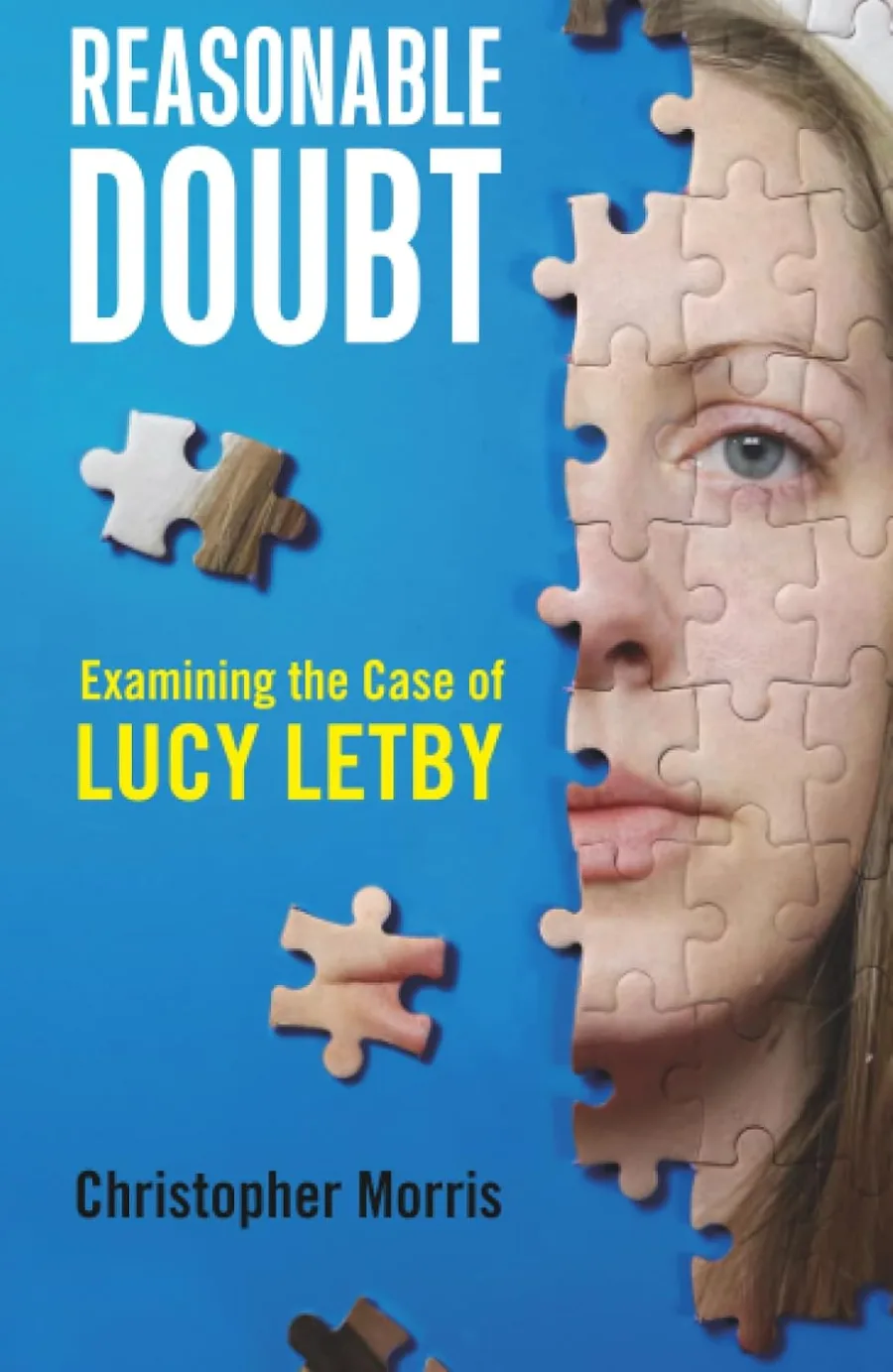
Download Cover Image
Do you want to download the full cover image for Reasonable Doubt: Examining the Case of Lucy Letby?