
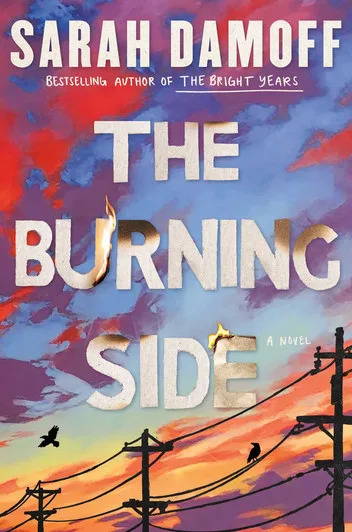
The Burning Side
eBook
• CAD 20.99
• English
• 9781668085035
No ratings yet
| Publisher | Simon & Schuster |
|---|---|
| ISBN13 | 9781668085035 |
| ASIN/SKU | B0FX5TC426 |
| Book Format | eBook |
| Language | English |
| List Price | CAD 20.99 |
| Publishing Date | 19/05/2026 |
| Book Code | BD00055426 |
Buy this Book
Amazon Stores
Ebook Stores
Other Stores
Discover The Burning Side by Sarah Damoff. This book is published by Simon and Schuster in eBook format, ISBN 9781668085035, ASIN B0FX5TC426, under Literature and Fiction, Literary.
Book Description
From the author of The Bright Years, the story of April and Leo, a couple on the brink of collapse. When their house goes up in flames, family secrets and thorny histories emerge as they are forced to decide what is worth salvaging.
When April and Leo’s house burns in the middle of the night, they escape with their two young children and the quiet knowledge that the fire is not the only thing threatening their family. They retreat to April’s childhood home in Dallas, where her spirited parents and siblings provide both comfort and complication.
As the family reckons with the aftermath—grief, guilt, logistics, and memories scorched and intact—the fire exposes the cracks already forming in April and Leo’s marriage. The novel unfolds in alternating perspectives: from April, who feels the crushing weight of motherhood, marriage, and self-blame; from Leo, a high school history teacher shaped by a lonely, fractured childhood; from Deb, April’s generous and no-nonsense mother who has to contend with her husband’s recent Alzheimer’s diagnosis; and from flashbacks that trace April and Leo’s relationship from its earliest days of connection to the devastating decisions that led them here.
A family saga suffused with humor, longing, and heartbreak, The Burning Side is about what we inherit and what we choose, about forgiveness and the ache of being known. It is, above all, about the meaning of home and the costs of long love.
When April and Leo’s house burns in the middle of the night, they escape with their two young children and the quiet knowledge that the fire is not the only thing threatening their family. They retreat to April’s childhood home in Dallas, where her spirited parents and siblings provide both comfort and complication.
As the family reckons with the aftermath—grief, guilt, logistics, and memories scorched and intact—the fire exposes the cracks already forming in April and Leo’s marriage. The novel unfolds in alternating perspectives: from April, who feels the crushing weight of motherhood, marriage, and self-blame; from Leo, a high school history teacher shaped by a lonely, fractured childhood; from Deb, April’s generous and no-nonsense mother who has to contend with her husband’s recent Alzheimer’s diagnosis; and from flashbacks that trace April and Leo’s relationship from its earliest days of connection to the devastating decisions that led them here.
A family saga suffused with humor, longing, and heartbreak, The Burning Side is about what we inherit and what we choose, about forgiveness and the ache of being known. It is, above all, about the meaning of home and the costs of long love.
Author Biography
Sarah Damoff is the author of the debut novel, THE BRIGHT YEARS, published by Simon & Schuster on April 22, 2025. It was a national bestseller; a Goodreads Choice Awards finalist; Southern Literary Review Book of the Year; and it is being translated into fourteen languages. Her writing has appeared in Oprah Daily, Porter House Review, Ruminate Magazine, and Open Global Rights, among other publications. She holds a degree in Family Studies and a Child Protection Certification from Harvard University. A Texas native, Sarah lives with her husband and children in Dallas, where she has been a social worker. Her second novel, THE BURNING SIDE, is forthcoming in May 2026.
Editorial Reviews
Editorial Reviews will be added soon…
Book Summary
The Burning Side by Sarah Damoff is a deeply moving work of contemporary literary fiction that explores what happens when a family is forced to confront both a devastating physical disaster and the emotional fires that have been smoldering beneath the surface for years. Rather than focusing on dramatic twists or sensational events, the novel examines marriage, parenthood, aging, forgiveness, and the meaning of home with remarkable sensitivity. Through multiple perspectives and a nonlinear narrative, Damoff creates an intimate portrait of a family learning that true healing begins only when painful truths are faced with honesty and compassion.
The story begins on a night that changes everything. April and Leo, a married couple with two young children, wake to discover that their home is engulfed in flames. They manage to escape safely, but they lose almost everything they own. Yet the fire is only the most visible disaster in their lives. Even before the blaze, their marriage had been slowly unraveling under the weight of disappointment, exhaustion, and unspoken resentment. The destruction of their house simply forces into the open the emotional damage that has been accumulating for years.
With nowhere else to go, the family moves into April's childhood home in Dallas. Her parents and siblings welcome them warmly, providing shelter and practical support during an overwhelming period. At first, the move appears to offer stability. The children are surrounded by loving grandparents, familiar routines begin to return, and everyone works together to rebuild their lives. Yet living under one roof also brings old family dynamics back to life. Long-buried memories, unresolved conflicts, and different ways of coping with hardship begin to surface.
The novel unfolds through several alternating viewpoints, allowing readers to understand the emotional landscape from different angles. April's chapters reveal the immense pressure she feels as a mother trying to hold her family together while privately carrying feelings of guilt, loneliness, and self-doubt. She loves her children deeply but struggles with the constant demands of parenting and the fear that she has somehow failed as both a wife and a mother. Her inner voice is marked by honesty rather than self-pity, making her experiences deeply relatable.
Leo's perspective offers an equally sympathetic portrait. A high school history teacher, he carries emotional wounds that stretch back to his own difficult childhood. Having grown up with instability and emotional neglect, he has always longed for the sense of belonging that April's close-knit family seemed to offer. Their marriage once represented safety, acceptance, and hope for a different future. As that relationship begins to fracture, Leo feels not only the loss of his wife but also the possible loss of the extended family that had become his emotional home. His struggle illustrates how childhood experiences often continue shaping adult relationships in ways people barely recognize.
Another important voice belongs to Deb, April's mother. Practical, generous, and fiercely devoted to her family, Deb appears to be the emotional anchor holding everyone together. Yet she is facing her own heartbreaking challenge. Her husband, Billy, has recently been diagnosed with Alzheimer's disease, forcing her to confront the slow disappearance of the man she has loved for decades. Rather than allowing this storyline to overshadow the others, Damoff weaves it naturally into the larger narrative, showing how different generations experience love, caregiving, and loss in distinct but deeply connected ways.
Interwoven with these present-day events are flashbacks tracing April and Leo's relationship from its earliest days. Readers witness the excitement of their first meeting, the joy of falling in love, the dreams they shared, and the gradual accumulation of disappointments that neither fully understood while they were happening. These memories reveal that the collapse of a marriage is rarely caused by a single dramatic event. Instead, it often results from countless small moments—conversations left unfinished, sacrifices taken for granted, ambitions postponed, and emotional needs left unspoken.
One of the novel's greatest strengths is its refusal to assign simple blame. Neither April nor Leo is portrayed as a hero or a villain. Both make mistakes. Both hurt each other. Both carry emotional scars that influence their choices. Damoff writes with extraordinary compassion, encouraging readers to see how ordinary people can slowly drift apart despite genuine love and good intentions. The story suggests that relationships are not destroyed only by betrayal or conflict but also by silence, misunderstanding, and the failure to truly see one another.
The house fire functions as the novel's central metaphor. While it literally destroys walls, furniture, photographs, and treasured possessions, it also strips away the illusions that have protected the family from confronting uncomfortable truths. Forced to rebuild from almost nothing, the characters begin asking themselves difficult questions about what truly matters. Is a home defined by the building itself, or by the people living inside it? Can a marriage survive after trust has been damaged? What parts of the past should be preserved, and what must be released to make room for healing?
Another significant theme is the inheritance people receive from previous generations. The novel explores how families pass down not only traditions and love but also fears, habits, emotional wounds, and patterns of communication. Leo's childhood continues influencing his adult relationships, while April's understanding of marriage is shaped by watching her parents. At the same time, Deb and Billy's long marriage demonstrates that enduring love is not the absence of hardship but the willingness to remain present through life's changing seasons. Their relationship provides a quiet contrast to the struggles of the younger couple, showing that commitment requires continual renewal rather than perfection.
Forgiveness emerges as the emotional heart of the novel. Damoff does not present forgiveness as forgetting painful experiences or pretending that mistakes never happened. Instead, she portrays it as the difficult decision to acknowledge human imperfection while remaining open to understanding and reconciliation. The characters gradually learn that healing often begins when people stop trying to win arguments and start trying to understand one another's hidden pain.
Throughout the novel, Damoff's prose remains gentle, lyrical, and emotionally honest. Everyday conversations, family meals, shared memories, and quiet moments carry as much significance as major plot developments. The pacing encourages reflection rather than urgency, allowing readers to connect deeply with the characters' emotional journeys. The story's power comes not from shocking revelations but from its truthful portrayal of ordinary lives shaped by love, disappointment, resilience, and hope.
Ultimately, The Burning Side is a profound meditation on marriage, family, and the meaning of home. Sarah Damoff reminds readers that while fires can destroy buildings, they can also illuminate what is truly worth saving. Through richly drawn characters and deeply humane storytelling, the novel shows that even after devastating loss, people retain the remarkable capacity to rebuild—not only their homes but also their relationships, their identities, and their faith in one another. It is a compassionate exploration of the fragile yet enduring bonds that hold families together, even when life tests them in the most painful ways.
The story begins on a night that changes everything. April and Leo, a married couple with two young children, wake to discover that their home is engulfed in flames. They manage to escape safely, but they lose almost everything they own. Yet the fire is only the most visible disaster in their lives. Even before the blaze, their marriage had been slowly unraveling under the weight of disappointment, exhaustion, and unspoken resentment. The destruction of their house simply forces into the open the emotional damage that has been accumulating for years.
With nowhere else to go, the family moves into April's childhood home in Dallas. Her parents and siblings welcome them warmly, providing shelter and practical support during an overwhelming period. At first, the move appears to offer stability. The children are surrounded by loving grandparents, familiar routines begin to return, and everyone works together to rebuild their lives. Yet living under one roof also brings old family dynamics back to life. Long-buried memories, unresolved conflicts, and different ways of coping with hardship begin to surface.
The novel unfolds through several alternating viewpoints, allowing readers to understand the emotional landscape from different angles. April's chapters reveal the immense pressure she feels as a mother trying to hold her family together while privately carrying feelings of guilt, loneliness, and self-doubt. She loves her children deeply but struggles with the constant demands of parenting and the fear that she has somehow failed as both a wife and a mother. Her inner voice is marked by honesty rather than self-pity, making her experiences deeply relatable.
Leo's perspective offers an equally sympathetic portrait. A high school history teacher, he carries emotional wounds that stretch back to his own difficult childhood. Having grown up with instability and emotional neglect, he has always longed for the sense of belonging that April's close-knit family seemed to offer. Their marriage once represented safety, acceptance, and hope for a different future. As that relationship begins to fracture, Leo feels not only the loss of his wife but also the possible loss of the extended family that had become his emotional home. His struggle illustrates how childhood experiences often continue shaping adult relationships in ways people barely recognize.
Another important voice belongs to Deb, April's mother. Practical, generous, and fiercely devoted to her family, Deb appears to be the emotional anchor holding everyone together. Yet she is facing her own heartbreaking challenge. Her husband, Billy, has recently been diagnosed with Alzheimer's disease, forcing her to confront the slow disappearance of the man she has loved for decades. Rather than allowing this storyline to overshadow the others, Damoff weaves it naturally into the larger narrative, showing how different generations experience love, caregiving, and loss in distinct but deeply connected ways.
Interwoven with these present-day events are flashbacks tracing April and Leo's relationship from its earliest days. Readers witness the excitement of their first meeting, the joy of falling in love, the dreams they shared, and the gradual accumulation of disappointments that neither fully understood while they were happening. These memories reveal that the collapse of a marriage is rarely caused by a single dramatic event. Instead, it often results from countless small moments—conversations left unfinished, sacrifices taken for granted, ambitions postponed, and emotional needs left unspoken.
One of the novel's greatest strengths is its refusal to assign simple blame. Neither April nor Leo is portrayed as a hero or a villain. Both make mistakes. Both hurt each other. Both carry emotional scars that influence their choices. Damoff writes with extraordinary compassion, encouraging readers to see how ordinary people can slowly drift apart despite genuine love and good intentions. The story suggests that relationships are not destroyed only by betrayal or conflict but also by silence, misunderstanding, and the failure to truly see one another.
The house fire functions as the novel's central metaphor. While it literally destroys walls, furniture, photographs, and treasured possessions, it also strips away the illusions that have protected the family from confronting uncomfortable truths. Forced to rebuild from almost nothing, the characters begin asking themselves difficult questions about what truly matters. Is a home defined by the building itself, or by the people living inside it? Can a marriage survive after trust has been damaged? What parts of the past should be preserved, and what must be released to make room for healing?
Another significant theme is the inheritance people receive from previous generations. The novel explores how families pass down not only traditions and love but also fears, habits, emotional wounds, and patterns of communication. Leo's childhood continues influencing his adult relationships, while April's understanding of marriage is shaped by watching her parents. At the same time, Deb and Billy's long marriage demonstrates that enduring love is not the absence of hardship but the willingness to remain present through life's changing seasons. Their relationship provides a quiet contrast to the struggles of the younger couple, showing that commitment requires continual renewal rather than perfection.
Forgiveness emerges as the emotional heart of the novel. Damoff does not present forgiveness as forgetting painful experiences or pretending that mistakes never happened. Instead, she portrays it as the difficult decision to acknowledge human imperfection while remaining open to understanding and reconciliation. The characters gradually learn that healing often begins when people stop trying to win arguments and start trying to understand one another's hidden pain.
Throughout the novel, Damoff's prose remains gentle, lyrical, and emotionally honest. Everyday conversations, family meals, shared memories, and quiet moments carry as much significance as major plot developments. The pacing encourages reflection rather than urgency, allowing readers to connect deeply with the characters' emotional journeys. The story's power comes not from shocking revelations but from its truthful portrayal of ordinary lives shaped by love, disappointment, resilience, and hope.
Ultimately, The Burning Side is a profound meditation on marriage, family, and the meaning of home. Sarah Damoff reminds readers that while fires can destroy buildings, they can also illuminate what is truly worth saving. Through richly drawn characters and deeply humane storytelling, the novel shows that even after devastating loss, people retain the remarkable capacity to rebuild—not only their homes but also their relationships, their identities, and their faith in one another. It is a compassionate exploration of the fragile yet enduring bonds that hold families together, even when life tests them in the most painful ways.
Sample Chapters
Sample Chapters will be added soon…
Reader Reviews
No reviews yet.
The Burning Side
Download Cover Image
Do you want to download the full cover image for The Burning Side?